Disorders -

Disorders

Immune Disorders
In a clinical trial on athletes at the University of Pretoria 35 drops of Cellfood® increased the oxygen uptake by 5%, and normalized all haematological (blood) values, amongst others.
Our products, in addition to and in conjunction with other medical treatments, can be of great benefit to one’s health.
Click on the headings below to view more information
Acquired Immune Deficiency Syndrome (AIDS)
Where one's viral load requires that ARV's be taken or are prescribed by a doctor, one must be sure to take that route.
Introduction
Human immunodeficiency virus (HIV), the virus that causes AIDS, is transmitted through sexual intercourse, exposure to infected blood products, and perinatally from mother to neonate.
  • An infected person might not develop the symptoms of AIDS immediately; some people may stay healthy for a long period of time (from two to ten years), while others become ill sooner. A small percentage may never get sick.
  • On average it takes about eight years for an HIV-infected person to develop AIDS.
AIDS is an immune system disorder.
  • When the human immunodeficiency virus invades immune cells like T lymphocytes and multiplies, it causes a breakdown in the body’s immune system, eventually leading to overwhelming infection and/or cancer.
  • Most deaths among people with AIDS are not caused by AIDS itself, but by one of the many infections or cancers to which the syndrome makes the body vulnerable.
Prevention and treatment
The amount of virus in the blood is known as the viral load.
    • In the first few months after infection, a large number of viral particles circulate in the blood (the infection is now very contagious).
    • Later the viral load drops to a lower level that remains constant for some time. This level is an important indicator of how contagious the person’s infection is and how fast the disease is likely to progress.
    • The viral load is measured during treatment since a decreasing or very low level indicates that treatment is working.
    • The goal of treatment is to lower the viral load to the point where it is undetectable (suppressed) in the blood, although some virus is probably still present.
Prevention and treatment of HIV/AIDS should incorporate a strategy that includes key elements like education, dietary support and nutritional supplementation, the use of complementary and alternative medicine, and the appropriate use of drugs like anti-retrovirals (ARVs).
      • A malnourished body has a compromised immunity - with a poor immune function there is an increased progression rate of the disease.
      • Certain nutrients in food play a particularly helpful role in enhancing the immune system including vitamin C and E, carotenoids and other immune boosting ingredients.
Nutritional supplements comprise a wide array of substances including amino acids, essential fatty acids, vitamins and minerals, enzymes and anti-oxidants.
      • Supporting science has established that many of these nutrients/substances have a positive influence on the disease markers that relate to HIV.
      • Significant among these substances are vitamin A, selenium, glutamine, co-enzyme Q10, beta-sitosterols and arginine.
Complementary and alternative medicines employ a wide range of substances.
      • Many of these substances include herbs that have been used for centuries for the treatment of immune-compromised conditions.
ARVs form part of the programme for the care of the HIV/AIDS patient.
  • ARVs have to be prescribed and administered by registered professionals after a careful assessment of the status of the patient.
  • It is necessary to introduce ARVs during the more developed phase of the disease.
Conclusion
It is essential that people with HIV/AIDS maintain proper immune function and prevent malnutrition to avoid opportunistic infections.
  • Emphasis must be placed on nutritious food, an aggressive supplementation programme, regular exercise, fresh air, positive thinking, and stress reduction.
  • There must also be an avoidance of any substance, activity, or behaviour that suppresses the immune system and prevents it from acting ay full capacity.
Fibromyalgia
What is fibromyalgia?
Fibromyalgia (FM) is a chronic disorder characterized by widespread musculoskeletal pain, fatigue, and multiple tender points. ‘Tender points’ refer to tenderness that occurs in precise, localized areas, particularly in the neck, spine, shoulders, and hips.
  • FM primarily occurs in women of childbearing age, but the elderly, men and children can also be affected.
  • Many children diagnosed with fibromyalgia, often start with flu-like symptoms and then become chronic, with sleep disturbance a major feature. Some children also display Attention Deficit Disorder (ADD) symptoms, fatigue, school and behavior problems and commonly a tendency to allergies. Some experts also find that such children frequently have very loose (hypermobile) joints.
What causes fibromyalgia?
Although the cause of fibromyalgia is unknown, researchers have several theories about causes or triggers of the disorder.
  • Some believe that the syndrome may be caused by an injury or trauma/shock (physical or emotional). This injury may affect the central nervous system.
  • Fibromyalgia may also be associated with changes in muscle metabolism, such as decreased blood flow, causing fatigue and decreased strength.
  • Others believe the syndrome may be triggered by an infectious agent such as a virus in susceptible people, but no such agent has been identified.
  • The myriad of symptoms certainly favors a central origin. No peripheral inflammatory or metabolic disorder has ever been defined as causal, but many patients do have arthritic or neuritic illnesses, which augment their centrally impaired pain-processing abilities.
  • Twenty to 40% of patients with connective tissue disorders, especially Lupus and Sjögren's syndrome, have concomitant fibromyalgia.
How is fibromyalgia diagnosed?
Fibromyalgia is difficult to diagnose because many of the symptoms mimic those of other disorders.
  • The physician reviews the patient's medical history and makes a diagnosis of fibromyalgia based on a history of chronic widespread pain that persists for more than 3 months.
  • The American College of Rheumatology (ACR) has developed criteria for fibromyalgia that physicians can use in diagnosing the disorder. According to ACR criteria, a person is considered to have fibromyalgia if he or she has widespread pain in combination with tenderness in at least 11 of 18 specific tender point sites.
  • Pain is considered widespread when all of the following are present: pain in the left side of the body, pain in the right side of the body, pain above the waist and pain below the waist. In addition there should be pain in the spine or the neck or front of the chest, or thoracic spine or lower back.
How is fibromyalgia treated?
Treatment of fibromyalgia requires a comprehensive approach. The physician, physical therapist, and patient may all play an active role in the management of fibromyalgia.
  • Studies have shown that aerobic exercise, such as swimming and walking, improve muscle fitness and reduce muscle pain and tenderness. Heat and massage may also give short-term relief.
  •  Antidepressant medications may help elevate mood, improve quality of sleep, and relax muscles. Sleep is a key feature of this condition and restoration of normal sleep is vital in recovery.
  • Patients with fibromyalgia may benefit from a combination of exercise, medication, physical therapy, and relaxation.
  • Many patients also have success using nutritional supplements.
Source: National Institute of Arthritis and Musculoskeletal and Skin Diseases.
OH MY ACHING BODY! Fighting Fibromyalgia
(article written by Michelle Schoffro Cook, DAc, CNC, CITP)
Click here to read article.
Tuberculosis: A disease of many organs
Dr Jacques Rossouw (DSc Biochemistry; Hons Pharmacology; MBA).
Tuberculosis (TB) is a contagious disease caused by a bacterium known as Mycobacterium tuberculosis. Although primarily a disease of the lungs, it can affect any organ including the bones, spine, intestines, kidneys, lymph nodes, bladder, joints, liver, heart, and spleen. There are two strains, one human and one bovine (cow), which are spread by inhalation of infected sputum in the case of the former and by drinking infected milk in the case of the latter.
TB is generally overcome by an intact immune system but anyone with a lowered resistance from conditions such as malnutrition, stress, steroid therapy, diabetes and drug use (including alcohol, smoking or those taking drugs for immuno-suppression, as in HIV and AIDS) are more likely to succumb if this disease is contracted. Anybody with lung infection or disease is also more prone.
The incidents of tuberculosis remain high in overcrowded and Third World countries, but until recently TB was on the wane in the Western world. Unfortunately, injudicious use of antibacterial agents has led to resistant strains developing, which are now defeating even the strongest of antibiotics.
Left alone, the great majority of those who contract TB will simply defeat the bacteria and leave a characteristic calcified area noted on X-rays. This is formed by the body's attempt to wall in the infection. The bacteria may continue to live within this cavity and escape at times when the individual is run down, causing a reactivation of the symptoms.
Investigations include chest X-rays with lesions that usually appear in the upper part of the lungs. Some blood changes may be found but a definitive diagnosis is generally made by culturing sputum or urine samples, depending upon where the infection is, and growing them in special culture mediums. In a severely ill person, treatment with antibiotics may need to be started before a firm diagnosis is made and before it is known whether the antibiotics being used are in fact going to affect this type of bacteria. Complementary medical treatment may be of benefit in less seriously ill people whilst they await the sensitivity reports so that accurate antibiotic treatment may be given.
Some treatment recommendations that may be of value:
  • If tuberculosis is diagnosed, do not rush into drug treatment unless symptoms are causing marked problems. Instead consult a complementary medical practitioner with experience in this field. Self-treatment may not necessarily be the best.
  • To be successful against tuberculosis, antibiotic treatment must usually be taken every day for between nine months and one year after initial diagnosis. Researchers have, however, documented numerous cases in which people discontinue treatment after the symptoms are gone but before the infection itself is under control. To prevent drug resistance stick to and complete the treatment regime.
  • Ensure that a change in lifestyle is made to eliminate all factors that may be reducing immunity, especially bad habits such as smoking and excess alcohol. Any drug abuse will reduce the body's immune response.
  • Prevention is generally the best form of treatment so ensure that your health is at an optimum level before visiting areas where tuberculosis is endemic.
Miliary tuberculosis spreads through the blood and can thus infect any tissue or organ. Widespread symptoms may occur and the above treatment recommendations should be considered bearing in mind that this condition is far more aggressive and likely to have a poorer prognosis.
Chronic Fatigue
Chronic fatigue syndrome and fibromyalgia – just all in the mind?
Dr Jacques Rossouw
Introduction
According to a medical dictionary fatigue is a state of increased discomfort and decreased efficiency resulting from prolonged or excessive exertion; loss of power or capacity to respond to stimulation (Dorland’s Illustrated Medical Dictionary, 1994 p612). Depending on their activity and stress levels, most people experience fatigue daily. The feeling of fatigue usually subsides after a good night’s rest or two.
Some people, however, experience fatigue for extended periods of time. Chronic fatigue immune dysfunction syndrome (CFIDS) is an illness with many names: chronic fatigue syndrome (CFS), ‘yuppie flu’ or myalgic encephalomyelitis (ME). CFS is defined as severe fatigue of unknown aetiology lasting more than six months. Fibromyalgia (FM) is also a chronic condition accompanied by many symptoms, including widespread pain and fatigue.
CFS and FM - the same illness, but different names?
CFS and FM are distinguished by great uncertainty regarding aetiology, diagnostics, treatment and prognosis. Both illnesses are criteria diagnoses, FM since 1981 and CFS since 1988. There is a partly overlapping symptomatology where the diagnosis CFS is connected with symptoms like fatigue and exhaustibility, muscle pain, sore throat, headache, impaired memory, concentration difficulties and sleep disorder and FM with symptoms such as aches, pain, stiffness and feebleness in the muscles, fatigue, headache, swelling, bowel problems, and sleeping difficulties.
Fibromyalgia
FM is characterized by long-lasting widespread pain, aching, fatigue and stiffness, and is often accompanied by non-restorative sleep, mood disturbance, irritable bowel syndrome, headache and paraesthesias. While the aetiology of FM is poorly understood, most researchers agree that aberrant central pain processing mechanisms and a complex interaction of multiple factors are responsible for the symptoms of FM.
The prevalence of FM has been estimated to be 1-3%, often co-existing with CFS. FM affects women more often than men and exacts a high toll with regard to morbidity. The psychological profile of FM sufferers is heterogeneous and includes individuals who appear to manage their symptoms by adapting to their limitations or developing strategies to cope with everyday problems and those who perceive themselves to be helpless and unable to cope with their symptoms (Mannerkorpi and Iverson, 2003).
Compared with their healthy counterparts, patients with FM display reduced upper and lower extremity physical performance capacity, and many everyday activities such as walking, working with arms, and prolonged sitting and standing are difficult to perform. They also demonstrate reduced aerobic capacity compared with published standards of healthy individuals, but not in studies comparing patients with sedentary healthy women.
The symptoms and associated disability of FM are often aggravated by physical activities, stress, anxiety, fatigue and poor sleep, thus affecting many dimensions of life. The severity and consequences of FM have been associated with pain, fatigue, helplessness, psychological distress, work status, coping, level of education and an escalation of work-related disability and healthcare costs.
FM sufferers tend to present as stressed, tense, depressed and anxious. It may be induced or intensified by physical or mental stress, chronic overwork, poor sleep or sleep disorders, physical or emotional trauma, depression, exposure to dampness or cold, and occasionally by a systemic, usually rheumatic disorder (Crane, 2005).
In milder cases FM may spontaneously go into remission when stress levels are decreased, but most patients have chronic symptoms that are constant or recur at frequent intervals. With treatment, however, many do eventually resume increased activities (Crane, 2005).
Conventional treatment usually includes bed rest and a recommendation to decrease stress levels. Doctors may also recommend stretching exercises, local applications of heat and gentle massage for the pain. Nutritional supplements are also used with great success.
Chronic fatigue syndrome
A number of theories exist regarding the causes of CFS and includes a dysfunctional immune system, ongoing depression, a traumatic or stressful event, or a viral/bacterial infection. Some scientists postulate that muscle deficits are the cause of fatigue following activity while others implicate deconditioning (Mannerkorpi and Iverson, 2003).
A multi-disciplinary approach is an effective way to provide relief: a medical intervention addresses the symptoms, offering medication for pain, sleep disturbances, depression and anxiety, and flu-like symptoms, where supportive therapies involve the know how of a dietician, psychologist, and a physiotherapist/chiropractor.
Whenever the possibility exists that the immune system is involved, it is important to ensure that adequate amounts of nutrients are consumed, thus strengthening the immune system.
What supplements can be used?
The following supplements have proven to be of benefit for both CFS and FM sufferers (Crane, 2005; Holford, 2004):
  • Beneficial intestinal flora
  • Magnesium malate (600mg)
  • Vitamin B1: to address thiamin deficiency symptoms
  • Vitamin B12 IM
  • Vitamin C (2 x 1g)
  • Zinc 15mg
  • L-tryptophan and / or 5HTP for serotonin and dopamine rebalancing
  • Vitamin B6  - 50mg
  • Selenium 200 - 300mg
  • DHEA 5 - 25mg
  • Multivitamin and mineral
  • Omega 3 and 6
  • Tokuhon medical plasters for the pain
References
Crane, A. 2005. Dis-Chem benefits magazine; issue 10, 96-97.
Holford, P. 2004. New optimum nutrition bible. Piatkus Books Ltd; 455.
Mannerkorpi, K. and Iverson, M.D. 2003. Physical exercise in fibromyalgia and related syndromes. Best practise and research clinical rheumatology, vol 17 (4), 629-647.
Chronic fatigue: what should you know?
What is chronic fatigue?
Fatigue is a state of increased discomfort and decreased efficiency resulting from prolonged or excessive exertion; loss of power or capacity to respond to stimulation. Depending on their activity and stress levels, most people experience fatigue daily. The feeling of fatigue usually subsides after a good night’s rest or two.
Some people, however, experience fatigue for extended periods of time. Chronic fatigue immune dysfunction syndrome (CFIDS) is an illness with many names: chronic fatigue syndrome (CFS), ‘yuppie flu’ or myalgic encephalomyelitis (ME). CFS is defined as severe fatigue of unknown aetiology lasting more than six months.
How is chronic fatigue treated?
A number of theories exist regarding the causes of CFS and includes a dysfunctional immune system, ongoing depression, a traumatic or stressful event, or a viral/bacterial infection.
A multi-disciplinary approach is an effective way to provide relief: a medical intervention addresses the symptoms, offering medication for pain, sleep disturbances, depression and anxiety, and flu-like symptoms, where supportive therapies involve the know how of a dietician, psychologist, and a physiotherapist/chiropractor.
Whenever the possibility exists that the immune system is involved, it is important to ensure that adequate amounts of nutrients are consumed, thus strengthening the immune system.
Are nutritional supplements of value?
The following supplements have proven to be of benefit for CFS sufferers: a multivitamin/mineral, a probiotic, vitamins B1, B6, B12, and C, the minerals magnesium, zinc and selenium, omega 3 and 6, DHEA, L-tryptophan and/or 5HTP.
1.         Cellfood® and chronic fatigue
2.         Cellfood® Longevity and chronic fatigue
Conclusion
People with CFS need to manage their symptoms and support their immune system by taking an oxygen mineral supplement such as Cellfood®. Cellfood® Longevity reduces homocysteine levels, helps with tissue repair and provides energy.
Sickle cell anemia
"Sickle cell anemia is a hereditary, genetically determined hemolytic anemia, one of the hemoglobinopathies, occurring almost exclusively in Blacks..." Dorland’s Illustrated Medical Dictionary.
1.  Introduction
Sickle cell disease (SCD) is an inherited blood disorder caused by a genetic mutation that leads to the generation of a mutant form of the beta-globin chain of hemoglobin (Hb). Red blood cells containing Hb with this mutant beta-globin chain change shape upon deoxygenation, get stuck in blood vessels, deprive the surrounding tissues of oxygen, and thus lead to organ damage.
SCD is inherited from both parents, usually presents in childhood and occurs more commonly in people (or their descendants) from parts of tropical and sub-tropical regions where malaia is or was common. One-third of all indigenous inhabitants of Sub-Saharan Africa carry the gene, because in areas where malaria is common, there is a survival value in carrying only a single sickle cell gene (sickle cell trait). Those with only one of the two alleles of the sickle-cell disease are more resistant to malaria, since the infestation of the malaria plasmodium is halted by the sickling of the cells which it infests (Marieb, 1998).
Someone who inherits the hemoglobin S gene from one parent and normal hemoglobin from the other parent will have sickle cell trait. People with sickle cell trait do not have the symptoms of true sickle cell anemia.
The prevalence of the disease in the United States is approximately 1 in 5 000 and about 1 in 500 black births have sickle cell anemia.
2. Causes
In sickle cell anemia (also known as sicklemia), the havoc caused by the abnormal hemoglobin S (HbS), results from a change in just one of the 287 amino acids in a beta chain of the globin molecule (a valine residue is substituted with a glutamine residue at position 6). This alteration causes the beta chains to link together to form stiff rods, and as a result hemoglobin S becomes spiky and sharp when not fully loaded with oxygen. This, in turn, causes the reb blood cells to become crescent-shaped when they unload oxygen molecules or when the oxygen content of the blood is lower than normal, as during rigorous exercise and other activities that increases the metabolic rate. The stiffened and deformed erythrocytes rupture easily and tend to dam up in small blood vessels. These events interfere with oxygen delivery, leaving the victims gasping for air and exterme pain. The standard traetment for an acute sickle cell crisis is a blood transfusion (Marieb, 1998).
3. Symptoms
Patient symptoms usually don't occur until after the age of four months. Almost all patients with sickle cell anemia have painful episodes (crises), which can last from hours to days. These crises can affect the bones of the back, the long bones, and the chest. Some patients have one episode every few years while others have many episodes per year. The crises can be severe enough to require a hospital stay.
Common symptoms include: abdominal, chest and bone pain, delayed growth and puberty, yellowing of the eyes and skin (jaundice), breathlessness, fever, fatigue, rapid heart rate, excessive thirst, frequent urination, painful and prolonged erection (priapism occurs in 10-40% of men with the disease), poor eyesight/blindness, strokes and skin ulcers (due to poor blood flow) (Hebbel, 2008).
4. Examinations and tests
Tests commonly performed to diagnose and monitor patients with sickle cell anemia include:
  • Complete blood count (CBC)
  • Hemoglobin electrophoresis<
  • Sickle cell test
5. Treatment
Patients with sickle cell disease need ongoing treatment, even when they are not having a painful crisis (Geller and O'Connor, 2008). The purpose of treatment is to manage and control symptoms, and to limit the frequency of crises. Painful episodes are treated with pain medication and by drinking plenty of fluids. Non-narcotic medications may be effective, but some patients will need large doses of narcotics.
Patients with SCD are advised to take folic acid and B12 (essential for producing red blood cells) because red blood cells are turned over so quickly.
Hydroxyurea is a drug some patients use to reduce the number of pain episodes (including chest pain and difficulty breathing) (Brawley et al., 2008). It may benefit some adults with moderate and severe SCD by increasing fetal Hb (HbF) expression. However, it does not work for all individuals. Moutouh-de Parseval and colleagues have however found that immunomodulatory anticancer drugs lenalidomide and pomalidomide are more effective than hydroxyurea at inducing HbF expression by erythrocytes derived in vitro from CD34+ cells from healthy individuals.
Antibiotics and vaccines are given to prevent bacterial infections, which are common in children with sickle cell disease. Blood transfusions are used to treat a sickle cell crisis. They may also be used on a regular basis to help prevent strokes.
5.1 The value of nutritional supplements
Although supplements won’t cure the disease, they do have value in alleviating some of the symptoms. An oxygen mineral supplement like Cellfood® could help in supplying oxygen to the oxygen-deprived cells. In a clinical trial on athletes at the University of Pretoria (Nolte, 2001), 35 drops of Cellfood® increased the oxygen uptake by 5%, and the ferritin levels by 31%, amongst others.
  • These findings can also be of benefit to the SCD patient. Cellfood® is rapidly absorbed by the body, assists with oxygenation and increases the oxygen saturation in the blood.
  • Oxygen is one of the important elements for aerobic life as we know it and is essential for energizing and cleansing the body.
  • The increased ferritin levels can assist with the production of more red blood cells that are needed to transport oxygen to the different organs and cells.
5.2 Other treatments for complications may include:
  • Dialysis or kidney transplant (kidney disease)
  • Drug rehabilitation and counseling for psychological complications
  • Gallbladder removal (gallstone disease)
  • Hip replacementfor avascular necrosis of the hip
  • Irrigation or surgery for persistent, painful erections (priapism)
  • Surgery for eye problems
  • Wound care, zinc oxide, or surgery for leg ulcers
Bone marrow or stem cell transplants can cure sickle cell anemia. However, transplants have many risks, including infection, and rejection, and are currently thus not an option for most patients. Also, sickle cell anemia patients are often unable to find well-matched donors.
6. Prognosis
In the past, sickle cell patients often died from organ failure/infection between the ages of 20 and 40. Thanks to a better understanding and management of the disease, patients can today live into their 50’s or beyond. Some people with the disease experience minor, brief, infrequent episodes. Others experience severe, long-term, frequent episodes with many complications.
7. Prevention
Sickle cell anemia can only occur when two people who carry the sickle cell trait have a child together. About 1 in 12 African Americans has the sickle cell trait. Genetic counseling is recommended for all carriers of the sickle cell trait. It is also possible to diagnose sickle cell anemia during pregnancy.
7.1 The sickling of red blood cells can be lessened by:
  • Getting enough fluids
  • Getting enough oxygen (use CellfoodÒ for example)
  • Quickly treating infections
Patients are advised to have physical examinationss every 3 - 6 months to ensure that their diets are still sufficient, and that they are receiving the proper vaccinations. Regular eye examinationss are also recommended.
7.2 Preventing infections and a crises:
  • People with sickle cell anemia need to keep their immunizations up to date, including Haemophilus influenza, pneumococcal, meningococcal, hepatitis B, and influenza;
  • Some patients may receive antibiotics to prevent infections, and
  • Parents should encourage children with sickle cell anemia to lead normal lives.
7.3 To reduce a sickle cell crises, the following precautions need to be taken:
  • To prevent oxygen loss, avoid:
    • Demanding physical activity (especially if the spleen is enlarged)
    • Emotional stress
    • Environments with low oxygen (high altitudes, nonpressurized airplane flights)
    • Smoking
    • Known sources of infection
  • Ensure sufficient fluid intake:
    • Avoid too much exposure to the sun;
    • Have fluids on hand, both at home and away, and
    • Recognize signs of dehydration.
  • To avoid infection:
    • Consider having the child wear a Medic Alert bracelet;
    • Have the child vaccinated as recommended by the health care provider, and
    • Share the above information with teachers and other caretakers, when necessary.
Be aware of the effects that chronic, life-threatening illnesses can have on siblings, marriages, parents, and the child.
8. References
Brawley OW, Cornelius LJ, Edwards LR, Gamble VN, Green BL, and Inturrisi C. 2008. National Institutes of Health consensus development conference statement: hydroxyurea treatment for sickle cell disease. Ann Intern Med. 148: 932-938.
Dorland’s Illustrated Medical Dictionary. 1988. 28th ed. WB Saunders Company, p74.
Geller AK, and O'Connor MK. 2008. The sickle cell crisis: a dilemma in pain relief. Mayo Clin Proc. 8; 83: 320-323.
Hebbel RP. 2008. Pathobiology of sickle cell disease. In: Hoffman R, Benz EJ, and Shattil SS, eds. Hematology: Basic Principles and Practice. 5th ed. Philadelphia, Pa: Elsevier Churchill Livingstone; chapter 42.
Lee MT, Piomelli S, and Granger Sl. 2006. Stroke prevention trial in sickle cell anemia (STOP): extended follow-up and final results. Blood. 108: 847-852.
Marieb EN. 1998. Human anatomy and physiololgy. Fourth ed. The Benjamin/Cummings Publishing Company, Inc. 635-636.
Nolte H. 2001. The effect of CellfoodÒ on exercise performance. MA dissertation, University of Pretoria.
Saunthararajah Y, Vichinsky EP, and Embury SH. 2008. Sickle cell disease. Clinical features and management. In: Hoffman R, Benz Jr. EJ, Shattil SS, eds. Hematology: Basic Principles and Practice. 5th ed. Philadelphia, Pa: Churchill Livingston; chapter 43.
U.S. Preventive Services Task Force. 2007. Screening for Sickle Cell Disease in Newborns: U.S. Preventive Services Task Force Recommendation Statement. Agency for Healthcare Research and Quality, Rockville, MD. Sep 2007: AHRQ Publication No. 07-05104-EF-2.

Bone, joint and muscle disorders

Bone, joint and muscle disorders
In a clinical trial on athletes at the University of Pretoria 35 drops of Cellfood® increased the oxygen uptake by 5%, and normalized all haematological (blood) values, amongst others.
Our products, in addition to and in conjunction with other medical treatments, can be of great benefit to one’s health.
Osteoarthritis
What is osteoarthritis?
Rheumatism is a general term indicating pain and stiffness affecting the muscular system, skeletal system, or both.
  • Arthritis is a term covering a number of conditions, which are characterized by damage to the articular cartilage of the joints.
  • The specific cause may vary; arthritis may result from viral or bacterial infection, injury to the joint by severe physical stress, metabolic problems, or autoimmune disorders.
  • This not only includes osteoarthritis (OA) and rheumatoid arthritis (RA), but also related conditions like polymyalgia rheumatica, reactive arthritis, psoriatic arthritis, rheumatic fever, rheumatism, septic arthritis, ankilosis spondilitis, and gout.
 The most common form of arthritis is OA.
  • Osteoarthritis is a degenerative disease in which the articular cartilage lining the bony surfaces inside a joint becomes progressively thinner until the bone beneath the cartilage on both sides of the joint ultimately becomes exposed.
  • In the advanced stages of OA, the exposed bones rub against one another, causing pain and severely limited joint movement.
The disease is three times more prevalent in older women than older men, although younger aged males are affected more often than younger females.
How is osteoarthritis treated?
OA is a nonfatal condition, but it is incurable, and there seems to be few effective treatments.
  • The common occurrence and clinical effects of OA make it a significant health problem, particularly among older individuals, and warrant methods to prevent or retard the disease.
Although there is no cure for OA, symptoms can generally be well controlled. Treatment of OA focuses on decreasing joint pain and stiffness, increasing the range of motion and functional independency, and decreasing disability.
1. Anti-inflammatories/analgesics
    • Once it has started to develop, OA can usually be kept under control for many years by using anti-inflammatories and analgesics – toxicity causing GI bleeding and ulcers is however a common concern when taking NSAIDs.
    • Corticosteroids, which relieve pain and inflammation, may also be injected directly into the affected joints in severe cases.
2.   Thermal modalities
  • Thermotherapy involves heating of tissue by heat packs, infrared lamps, diathermy, ultrasound, and water bottles.
  • Moist heat application (viz hydrotherapy) can reduce joint pain, increase blood flow, and may be useful before exercise.
  • Cryotherapy involves applying a cold massage to the injured joint for a period of time by means of an ice pack.
3.   Joint protection and footwear
  • Strategies may involve using braces, crutches, and splints.
  • These increase functional capacity, maintain joint alignment, and decrease the stress placed on the joints.
  • Joint protection strategies also involve recommendations for safe and appropriate exercise practices.
The role that physical inactivity can play in the development of OA is well defined. However, rest is important, particularly during the acute stages of the condition. The proper blends of correct exercise and rest for the specific patient are of utmost importance and could be facilitated by a biokineticist.
Correct footwear is also important, and may involve wedged insoles or orthotics, or specially designed shoes. The purpose here is to correct any biomechanical deviations, improve mobility, reduce pain, or compensate for any foot deformity.
4.   Surgical procedures
  • Surgery can realign or redesign the affected joint – in extreme cases, an artificial one may even replace the defective joint.
  • This is mainly in cases involving the hip, knee, elbow, or shoulder joints.
5.   Patient education
  • Patients need to be educated regarding their condition as well as the different treatment options.
  • Coping skills and social support are also important in determining the individual’s perception of disability from the condition.
6.   Nutritional therapy
  • Anti-inflammatory herbs and foods, as well as collagen building supplements are available for the treatment of OA.
  • Research seems to suggest that natural supplements may be beneficial in this regard. These include glucosamine sulphate, essential fatty acids, chondroitin sulphate, MSM, silicon, l-proline, dl-phenylalanine and vitamin E and C, amongst others.
  • Calcium and magnesium – needed to prevent bone loss
  • Copper – a cofactor for lysyl oxidase, which strengthens connective tissue
  • Zinc – needed for bone growth, often deficient in OA patients
  • Boron – required for healthy bones
  • Silica – supplies silicon, important for rebuilding of the connective tissues and formation of bones
  • Manganese – needed for normal bone growth
  • Amino acids – to supply protein needed for tissue repair
  • Proteolytic enzymes – to protect the joints from free radical damage
  • Selenium – powerful antioxidant
  • Germanium – antioxidant that also relieves pain
Cellfood® Repair
Silicon is essential for the formation of collagen for bones and connective tissue and for calcium absorption in the early stages of bone formation. Calcium, boron, manganese, magnesium, and potassium aid in the efficient utilization of silicon – all made available in a sublingual form for better bio-availability and assimilation.
In summary: regular exercise, physical therapy, nutritional supplements and drugs that reduce inflammation, can slow the progress of the disease, and thus make life more bearable for the OA sufferer.

Lung and Airway disorders

Lung and Airway disorders
In a clinical trial on athletes at the University of Pretoria 35 drops of Cellfood® increased the oxygen uptake by 5%, and normalized all haematological (blood) values, amongst others.
Our products, in addition to and in conjunction with other medical treatments, can be of great benefit to one’s health.
Asthma
What is asthma?
Asthma is a hyper-reactive, inflammatory condition of the bronchial tubes which impair airway function. Dust, chemicals, antibodies, and exercise amongst others can initiate an attack.
How is asthma treated?
The safest approach to reducing or eliminating asthma attacks is to avoid known irritants or initiators, to create a personal environment containing purified (filtered) air, and to build a strong respiratory tract and balanced immune system. Important lifestyle changes such as stress reduction, exercise, plenty of sleep and clean air in the bedroom all make a big difference to quality of life for an asthmatic.
The immune system of most asthmatics is under pressure, not only from possible allergens, but also due to the consequences of the stress associated with acute/chronic ill health. Couple this with a weakened digestive system, possibly not able to cope adequately with proper absorption of nutrients, as a result of things like medications, food sensitivities and general gutdysbiosis, and the asthmatic is further compromised.
Are nutritional supplements of value?
Supplements help the asthmatic recover, and control future attacks. The following are of value: Vitamin C, selenium and other antioxidants; probiotics; fish oils and cod liver oil; MSM; magnesium (critical in helping to relax airways); multivitamins and Cellfood®.
In conclusion, good food, a healthy lifestyle and targeted supplementation is a winning combination to help asthmatics reach a point of ‘remission’ where they can live normal lives with minimal drug intake, and maximum health.

Digestive disorders

Digestive disorders
In a clinical trial on athletes at the University of Pretoria 35 drops of Cellfood® increased the oxygen uptake by 5%, and normalized all haematological (blood) values, amongst others.
Our products, in addition to and in conjunction with other medical treatments, can be of great benefit to one’s health.
Stress, what should you know?
A state of continual stress wears out the body – due to its effect on the immune response, stress increases susceptibility to illness and slows healing. Stress involves a number of physiological responses, the ultimate aim of which is to restore balance within the body.
  • The brain for example regulates the secretion of hormones and the nervous system to ensure that the muscles have enough energy and oxygen to fuel the familiar ‘fight or flight’ response
  • Researchers estimate that stress contributes to as many as 80 percent of all major illnesses, including cardiovascular disease, cancer, endocrine and metabolic disease, skin disorders, and infectious ailments
The body responds to stress with a series of physiological changes that include increased secretion of adrenaline, elevation of blood pressure, acceleration of the heartbeat, and greater tension in the muscles.
Stress and nutritional deficiencies
The increased production of adrenal hormones is responsible for most of the symptoms associated with stress – it is also the reason why stress can lead to nutritional deficiencies.
  • Increased adrenaline production enhances the metabolism of fats, proteins, and carbohydrates to quickly produce energy for the body to use. This response causes the body to excrete amino acids, potassium, and phosphorus; to deplete magnesium stored in muscle tissue; and to store less calcium
  • Stress also promotes the formation of free radicals which damage tissues, especially cell membranes
Supplements that can assist with nutritional deficiencies due to stress are multivitamin/mineral combinations, amino acids, melatonin and certain herbs to mention a few.
Cellfood® Longevity and stress
Vitamins B6, B12 and folic acid are inversely associated with high levels of homocysteine, which is an important risk factor for heart disease. By supplementing the diet with these vitamins as contained in Cellfood® Longevity, the deficiencies that result due to stress are alleviated.

Heart and Blood vessel disorders

In a clinical trial on athletes at the University of Pretoria 35 drops of Cellfood® increased the oxygen uptake by 5%, and normalized all haematological (blood) values, amongst others.

Our products, in addition to and in conjunction with other medical treatments, can be of great benefit to one’s health.

Heart and Blood vessel disorders
According to the Heart and Stroke Foundation of Southern Africa about 130 heart attacks and 240 strokes occur daily. Smoking doubles the risk of having a stroke and increases the risk of a heart attack by two to three times. Cardiovascular disease (CVD - disease of the heart and blood vessels) claims more lives than the subsequent six causes of death combined.
CVD is seen as having multiple causes, including:
  • Nutritional deficiencies and/or excess of anti-nutrients (sugar, processed foods, saturated fat, etc.)
  • Excess production of free radicals
  • Excess stress resulting in an overproduction of the stress hormones (adrenalin, noradrenalin, cortisol)
  • The release of inflammatory cells (cytokines) in response to aIl of the above
Risk factors for CVD include factors that can not be changed (i.e. age, genetics and gender) and those that can be changed/controlled by lifestyle.
  • Chronic degenerative diseases like obesity, stroke, heart disease, diabetes and some cancers are also considered by experts as risk factors for CVD.
Factors that can be changed/controlled by lifestyle
The success of lifestyle management programmes is definitely more successful when initiated before the onset of the disease.
1.         Diet
One of the most successful lifestyle modifications for the prevention/management of CVD is dietary modification.
  • People are advised to eat small meals more regularly and reduce animal protein intake.
  • Dieticians suggest people remove, or at least reduce saturated/hydrogenated fats from the diet, and avoid excess sugar and caffeine intake.
  • They further encourage people to increase the consumption of plant protein (nuts, seeds, legumes, and beans), vegetables, fruit, and whole grains, avoiding processed and fast foods as far as possible.
Taking nutritional supplements could also be of benefit. Nutrients that could be helpful for heart disease include:
  • Co-enzyme Q10 - one of the most important nutrients for heart muscle functions; increases oxygenation of heart tissue. Has been shown to prevent recurrences in individuals who had a heart attack
  • L-carnitine - essential nutrient allowing the mitochondria of the heart cells to produce energy more effectively. Reduces fat and triglyceride levels in the blood
  • Magnesium - relaxes smooth muscle (is a vasodilator) and decreases the risk of irregular heart beat
  • Potassium – needed for electrolyte balance, especially if taking cortisone or blood pressure medication
  • Copper - deficiency has been linked with heart disease
  • Selenium - deficiency has been linked with heart disease
  • Vitamin E - a good antioxidant that also decreases platelet adhesiveness and aggregation
  • Vitamin C - an antioxidant which is important for the integrity of the cardiovascular system
  • Omega 3/fish oils - useful in the prevention of coronary heart disease (helps prevent the hardening of the arteries)
  • Flavonoids - decrease capillary fragility, improve the tone of vascular smooth muscles, decrease the incidence of ventricular tachycardia, and have an antioxidant effect on the heart
  • The amino acid L -arginine - a precursor in the production of nitric oxide, a potent vasodilator in the vascular system. It also has a protective effect on endothelium
  • Vitamins B6, B12 and folic acid - inversely associated with levels of homocysteine, which is an important risk factor for heart disease
  • Citrin K (an extract from Garcinia cambogia) - inhibits the synthesis of fatty acids in the liver, thus helping to prevent the accumulation of potentially dangerous fats 
2.         Smoking
Tobacco smoke contains thousands of chemical constituents, amongst others, nicotine and carbon monoxide.
  • At doses normally ingested by smokers, nicotine acts as a stimulant on the central nervous system – adrenaline production increases, raising the blood pressure and heart rate
  • Carbon monoxide binds to hemoglobin, interfering with the transport of oxygen throughout the body
  • It also promotes the development of cholesterol deposits on artery walls
  • These two factors increase the risk of heart attack and stroke
3.         Exercise
Research indicates that 30 minutes of moderate aerobic exercise (jogging, cycling, walking or swimming) three to four times a week is sufficient to assist the cardiovascular system and to help manage weight.
  • To optimise the health benefits of an exercise regime, training should however be maintained indefinitely
  • Free radicals increase in the body during stress and exercise. They cause oxidative stress to the body and may contribute to more than sixty health conditions, including atherosclerosis and heart disease
  • Fortunately the body has antioxidant enzymes, and the diet and supplements containing antioxidants assist the body in supporting the immune and cardiovascular systems, amongst others
4.         Weight management
Overweight and obesity are associated with a number of disabling and potentially fatal conditions and diseases (such as heart disease, cancer, and diabetes).
  • A healthy body weight is an important part of wellness - but short-term dieting is not part of a fit and well lifestyle
  • Maintaining a healthy body weight requires a lifelong commitment to regular exercise, a healthy diet, and effective stress management
5.         Rest and relaxation
People in general need between seven and eight hours of uninterrupted sleep a night. A stress management programme can assist those not getting sufficient rest.
Cellfood® Sport/Shape
In a clinical trial on athletes at the University of Pretoria 20 drops of Cellfood® Sport/Shape:
  • Increased the oxygen uptake by up to 6.2%
  • Increased energy delivery to muscles (haemoglobin oxygen saturation increased up to 9.6%)
  • Delayed onset of fatigue and reduced muscular cramps and recovery time (Lactic acid accumulation decreased up to 17.2%)
Cellfood® Sport/Shape contains Cellfood®, Citrin K and L-carnitine
  • Citrin K - inhibits the synthesis of fatty acids in the liver, thus helping to prevent the accumulation of potentially dangerous fats
  • L-carnitine - essential nutrient allowing the mitochondria of the heart cells to produce energy more effectively. Reduces fat and triglyceride levels in the blood
Cellfood® Longevity
  • Vitamins B6, B12 and folic acid - inversely associated with levels of homocysteine, which is an important risk factor for heart disease
Conclusion
The world of the new millennium is the world of the individual - people expect to get more out of life and improve their quality of life.
  • Most conditions being treated by medicines are preventable - chronic degenerative diseases like heart disease and stroke, are clearly linked to the diet and lifestyle.
  • People with cardiovascular disease could benefit from using Cellfood® and the Cellfood® family

Other disorders

In a clinical trial on athletes at the University of Pretoria 35 drops of Cellfood® increased the oxygen uptake by 5%, and normalized all haematological (blood) values, amongst others.

Our products, in addition to and in conjunction with other medical treatments, can be of great benefit to one’s health.

Other disorders
Introduction
Addiction is when the body becomes so accustomed to the presence of a foreign substance that it can no longer function properly if the substance is withdrawn. Individuals who are addicted to substances (drugs) can end up centering their lives on avoiding the pain of withdrawal – that is, on assuring a continuing supply of the substance of abuse.
  • Research reveals detectible levels of human-manufactured toxins in all individuals.
  • Accumulations of chemicals in body tissues are increasingly associated with patterns of adverse health including suppressed or inappropriate/hyperreactive immune function (autoimmunity, asthma, and allergies), cognitive deficits, cancers, mood changes, neurological illnesses, changes in libido, reproductive dysfunction, and glucose dysregulation.
Why are these substances so harmful?
Complicating the phenomenon of addiction is the problem of drug tolerance.
  • With prolonged substance use, the human body often ends up needing more and more of the substance to produce the desired effects and to prevent withdrawal symptoms.
  • Addiction usually has a powerful psychological as well as a physical component.
  • While psychological dependence does not lead to physical withdrawal symptoms after the drug is discontinued, it does result in deep cravings that may persist long after any physical addiction has been overcome.
Research is mounting that the long-term effects of drug consumption are greater than has been assumed.
  • It is not simply the case that these effects occur during active drug use, but rather that these effects continue after discontinuation of drug use.
  • It may require a much longer period for drugs or their metabolites to be fully cleared from the body than previously supposed, with consequent residual physical and psychological effects.
Both the biological activity of a compound and its physiologic disposition (ultimate fate) are largely determined by its chemical properties in relation to extant biological structures and processes.
  • Barring specific transport mechanisms, the distribution patterns and speed with which chemicals diffuse into various tissues are largely driven by lipophilicity - the thermodynamic tendency of a compound to dissolve into lipid-rich spaces.
  • With certain exceptions (e.g., insulin), drugs tend to be very lipophilic and to have a large distribution volume.
  • They tend to deposit in various tissues in the following order: lung, fat, heart, kidney, brain, gut, muscle and bone, preferentially accumulating in lysosomes.
Adipose tissue is a very intricate organ and not merely involved in storing excess calories and "unwanted" compounds.
  • Recent research reveals that hormones released by adipose tissue regulate many bodily functions including emotional state, energy level and body metabolism, hunger and cravings, inflammatory response, and also modulate immune function.
  • Symptoms associated with disruption of these systems are common in those exposed to environmental chemicals and also in substance abusers.
There are many mechanisms by which retention of chemicals/drugs in the body can negatively impact health.
Chemical-communication mimetics
Many drugs and toxins mimic substances naturally found in the body and may directly affect normal trans-cellular chemical communication by hormones and cytokines.
  • Structural mimetics often cause effects quite dissimilar or even opposite to those of the endogenous substance (for example blockage of a receptor normally accessible to a hormone).
  • This may occur locally within a tissue (paracrinely), or endocrinely as drugs/toxins are released from body tissues back into circulation.
  • Further, circulating drugs and toxins may occupy sites on plasma transport proteins thereby subtly interfering with the equilibria kinetics that govern plasma transport of nutrients and hormones, for example.
Genetic/metabolic disruption
Retention of toxins in key organs may directly impair organ health and function by a number of intracellular mechanisms, including:
  • disruption of the sophisticated networks that regulate situational gene expression, or
  • the delicate feedbacks by which the intermediates and products of constitutive metabolic chains regulate the activity of key metabolic enzymes.
Nutrient deficiency
Eliminating toxins requires certain endogenous substances to assist in the detox process.
  • Nutrients used during metabolic processes of detoxification are concomitantly or subsequently not available for other metabolic processes, thus creating local deficiencies.
  • Chronic exposure may result in systemic deficiencies of many essential nutrients.
Nutrients that can help during recovery from drug addiction
A person can be addicted to substances other than illegal drugs.
  • Many are addicted to caffeine, nicotine, alcohol, sugar, and even certain foods. Although these addictions may not pose as great a health risk, withdrawal may still be painful and difficult. People using these substances may also be more susceptible to illness and disease because these addictive substances deplete the body of needed nutrients.
  • Many drug users suffer from malnutrition. Because drugs rob the body of essential nutrients, those addicted need to take high doses of nutritional supplements. In many cases there might be a deficiency of oxygen, hydrogen, minerals, enzymes or even amino acids (building blocks of protein and neurotransmitters).
Nutrients of importance for a person recovery from drug abuse are:
  • All the vitamin B’s including vitamin B12 and vitamin B5. These are needed when under stress to assist in the rebuilding of the liver and adrenal glands and are important for brain function.
  • Vitamin C – detoxifies and lessens the cravings for drugs.
  • Multivitamin/mineral complex – all nutrients are needed in high amounts.
  • Calcium and magnesium – nourishes the central nervous system and helps control tremors.
  • Amino acids including L-glutamine, L-phenylalanine, and L-tyrosine. Supply needed protein and passes the blood-brain barrier to promote healthy mental functioning.
  • Glutathione – aids in detoxifying drugs to reduce their harmful effects. Also reduces the desire for drugs and alcohol.
Cellfood®
In a clinical trial on athletes at the University of Pretoria 35 drops of Cellfood® increased the oxygen uptake by 5%, and normalized all haematological (blood) values, amongst others.

Hormonal Disorders

Hormonal Disorders
Download Dr Jacques Rossouw article on Diabetes Mellitus (DOC 37Kb)
What is the link between high levels of homocysteine and diabetes mellitus with reference to the risk for coronary heart disease?
Introduction
Over 200 million people world-wide suffer from diabetes mellitus (DM). The incidence is increasing and some scientists predict that in the next 20-25 years, as life expectancy increases, this number will exceed 300 million. DM is characterised by hyperglycaemia. Two major types of DM are described: type I or more commonly known as insulin dependent diabetes mellitus (IDDM), and type II known as non-insulin dependent diabetes mellitus (NIDDM). Type I affects approximately 15% of all people with diabetes whereas type II affects approximately 85%. In normal individuals, blood glucose levels in the body are tightly regulated between 3.5 and 5.5 mmol/l by a myriad of hormones acting on a number of tissues including the kidney, liver, muscle and adipose tissues (Mathai et al., 2007).
Diabetes and vascular disease
“Diabetic complications are predominantly due to microvascular and macrovascular damage. Microvascular complications include renal failure, blindness and symptomatic sensorimotor neuropathy; macrovascular complications include coronary artery and peripheral vascular disease. In the last 10 years, large scale clinical studies have shown the link between good long term glycaemic control and a reduction in these complications in type I and II diabetes.
The molecular and cellular mechanisms underlying the vascular pathology in DM are probably multifactorial. The primary target is the endothelial cell which lines both large and small blood vessels and maintains vascular integrity by acting as a selective barrier to transvascular flux. The endothelial cell has a myriad of functions including regulation of cell adhesion, fibrinolysis, thrombosis, extracellular matrix production and in maintaining vascular tone. These functions are stimulated by flow and mechanical stress and mediated through the production of antioxidants, antithrombotics and anti-adhesives. These mechanisms afford protection to the integrity of the microvessel. Vasoactive regulators produced by the endothelium include arachidonic acid products and nitric oxide. Nitric oxide is the major regulator of flow dependent dilatation after increased arteriolar flow. The failure of tissues to regulate blood flow is one of the major functional problems thought to contribute to vascular damage in diabetes.” - Mathai et al., 2007.
Homocysteine and vascular disease (Mathai et al., 2007)
“McCully first postulated a link between elevated homocysteine concentrations and vascular disease in homocystinuric patients. Patients with this condition have fasting homocysteine levels over 100 mmol/l compared with general population concentrations of less than 10 mmol/l. In homocystinuria, 50% of patients suffer thromboembolic or atherosclerotic events before 30 years. Homocystinuria is essentially a metabolic disorder characterised by defects in the remethylation or catabolism of homocysteine resulting in elevated homocysteine concentrations. Irrespective of the underlying metabolic defect the risk of vasculopathy is the same. This suggests that homocysteine, and not the metabolic block, is responsible for disease.
In the last 25 years a large number of prospective studies have confirmed that homocysteine is an independent risk factor for vascular disease in the general population. One in seventy people show elevated levels, the majority of which are due to genetic or nutritional factors. Evidence for causality comes from a number of studies of which a synthesis is listed below:
  • Elevations in homocysteine occur before the onset of vascular disease.
  • Elevated homocysteine levels show the same strong graded risk effect for both micro and macrovascular complications, performed across different continents, using different research methodologies. These studies include genetic and other causes of raised homocysteine levels.
  • Homocysteine lowering treatment decreases blood pressure, reverses endothelial dysfunction and decreases the rate of coronary re-stenosis.
  • In vitro and in vivo work confirm that homocysteine is both atherogenic and thrombogenic, providing biological plausibility for causality.
What are the mechanisms through which homocysteine may promote damage?
An association between elevated levels of homocysteine and the vascular complications of diabetes has been reported by several research groups (Hoogeveen et al., 1998). In patients with diabetes, elevated homocysteine levels have been reported to be associated with endothelial dysfunction (Hofmann et al., 1998), insulin resistance (Meigs et al., 2001), prothrombotic state (Aso et al., 2004), macroangiopathy Smulders et al., 1999; Buysshaert et al., 2000) and nephropathy (Buysschaert et al., 2000; Davies et al., 2001; Emoto et al., 2001).
A host of mechanisms through which homocysteine may promote vascular damage (Welch and Loscalzo, 1998), as well as a synergism between homocysteine and diabetic status have been reported (Hofmann et al., 1998). Of note, several studies have demonstrated that elevated homocysteine levels predict the risk of death or coronary events in patients with type 2 diabetes mellitus (Kark et al., 1999; Stehouwer et al., 1999; Hoogeveen et al., 2000). In patients with type 2 diabetes, however, plasma homocysteine levels have been reported to be increased, unchanged or decreased. Conflicting results regarding the circulating levels of homocysteine in patients with diabetes may relate to heterogeneity of the patients included, particularly with regard to renal function status and presence of vascular arterial disease. Another important reason for conflicting results may relate to the remarkably small numbers of patients included in the studies assessing circulating homocysteine levels in patients with diabetes (Ndrepepa et al., 2008).
Only a few studies have dealt with the link between hyperhomocysteinemia and macroangiopathy in diabetic patients. However, all these studies report a strong association between total homocysteine (tHcy) and macrovascular lesions (see review by Buysshaert et al. (2007). Buysshaert and co-workers (2000) studied 122 type 2 diabetic subjects and presented evidence that the prevalence of macroangiopathy was higher in individuals with hyperhomocysteinemia than in those without hyperhomocysteinemia (70% versus 42%, p < 0.01), even when other confounding risk factors were taken into account (in particular renal function).
In a study by Rudy and co-workers (2005) diabetic patients with coronary artery disease had higher tHcy in comparison with diabetic individuals without vascular lesions; homocysteine levels correlated significantly with incidence of ischemic heart disease. These results are in keeping with data from Becker et al. (2003), who showed that among type 2 diabetic individuals, the risk of coronary events increased by 28% for each 5 mmol/l increment of tHcy, independent of traditional cardiovascular risk factors. The study of Hoogeveen et al. (2000) indicated that hyperhomocysteinemia appeared to be a higher (1.9-fold) risk factor for mortality in type 2 diabetic patients than in non-diabetic subjects. Soinio et al. (2004) extended these results by showing that type 2 diabetic patients with tHcy above 15 mmol/l had a heightened risk of coronary heart disease mortality during a 7-year follow-up than those with levels below 15 mmol/l, even after adjustment for confounding variables.
In type 1 diabetic patients, Hofmann and co-workers (1998) observed a macroangiopathy prevalence of 57 and 33%, respectively, in the presence and absence of hyperhomocysteinemia. This increased prevalence was confirmed by Agullo´-Ortuno and co-workers (2002).
Can homocysteine levels be lowered by nutritional supplements?
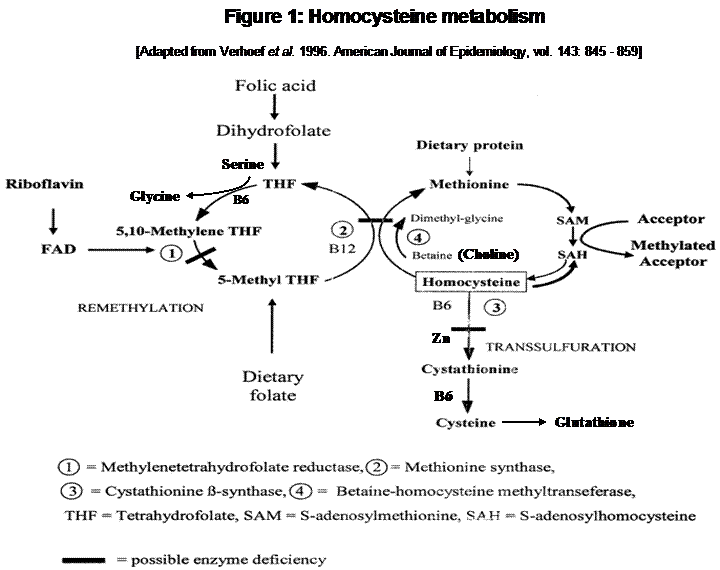
Homocysteine is either re-methylated to methionine by a vitamin B12 and folate-dependent enzyme (5-methyltetrahydrofolate-homocysteine methyltransferase), or is irreversibly catabolised by the transsulphuration pathway, which utilises vitamin B6 (pyridoxal-5'-phosphate) in at least one enzyme-catalysed reaction (Figure 1). Defects in either of these pathways will result in hyperhomocysteinemia. Such a defect can either be caused by a) a deficiency of one of the essential co-factors for normal homocysteine metabolism; vitamin B12, vitamin B6 or folate, or b) certain enzyme variants, which may also cause hyperhomocysteinemia.
For efficient homocysteine metabolism, an adequate supply of vitamin B12, vitamin B6, folic acid, zinc and trimethylglycine (betaine) is required. However, during food refinement and processing, losses of these nutrients may occur (Van Brummelen 2005 and 2007).
Vitamin and mineral supplementation and homocysteine
A daily vitamin supplement (containing vitamin B6, folic acid and vitamin B12) normalised elevated circulating homocysteine levels in patients within six weeks of treatment (Ubbink et al., 1993). This was in agreement with Brattstrom's studies (Brattstrom et al., 1988), which investigated the effect of vitamin B12, vitamin B6 and folic acid on circulating homocysteine levels. Magnesium is also an essential co-factor for the enzyme methionine adenosyl transferase, which forms SAM from L-methionine. It is thus clear that the vitamin and mineral status is an important determinant of circulating homocysteine levels (Van Brummelen, 2005).
In a clinical trial conducted at the ISR (University of Pretoria), Kruger and co-workers (2009) studied the efficacy of NCODE (Cellfood Longevity) on physical performance and selected markers of health status in males. Twenty healthy sedentary volunteers between the ages of 30 and 60 years with a homocysteine level higher than 10 mmol/l were included in the study. Some of the findings were as follow:
  • Statistically significant increase in serum folate
  • Statistically significant reduction in homocysteine (15%)
  • No change in urate levels
Conclusion
Reducing homocysteine will not only benefit diabetics, but also non-diabetics suffering from other chronic conditions.
References
Agullo´-Ortuno M, Albaladejo M, Parra S, Rodriguez-Manotas M, Fenollar M, and Ruiz-Espejo F. 2002. Plasmatic homocysteine concentration and its relationship with complications associated to diabetes mellitus. Clin Chim Acta; 326:105-112.
Aso Y, Yoshida N, Okumura K, Wakabayashi S, Matsutomo R, and Takebayashi K. 2004. Coagulation and inflammation in overt diabetic nephropathy: association with hyperhomocysteinemia. Clin Chim Acta; 348:139-145.
Becker A, Kostense P, Bos G, Heine R, Dekker J, and Nijpels G. 2003. Hyperhomocysteinemia is associated with coronary events in type 2 diabetes. J Intern Med; 253:293-300.
Brattstrom LE, Israelson B, Jeppson JO, and Hultberg BL. 1988. Folic acid an innocuous means to reduce plasma homocysteine. Scandinavian Journal Clinical and Laboratory Investigation;48: 215-221.
Buysschaert M, Dramais AS, Wallemacq P, and Hermans MP. 2000. Hyperhomocysteinemia in type 2 diabetes. Diabetes Care; 23:1816-1822.
Buysshaert M, Preumont V, and Hermans M P. 2007. Hyperhomocysteinemia and diabetic macroangiopathy: guilty or innocent bystander? A literature review of the current dilemma. Diabetes and Metabolic Syndrome: Clinical Research and Reviews; 1: 53-59.
Davies L, Wilmshurst EG, McElduff A, Gunton J, Clifton-Bligh P, and Fulcher GR. 2001. The relationship between homocysteine, creatinine clearance, and albuminuria in patients with type 2 diabetes. Diabetes Care; 24: 1805-1809.
Emoto M, Kanda H, Shoji T, Kawagishi T, Komatsu M, and Mori Kl. 2001. Impact of insulin resistance and nephropathy on homocysteine in type 2 diabetes. Diabetes Care; 24:533-538.
Hofmann MA, Kohl B, Zumbach M, Borcea V, Bierhaus A, and Henkels M. 1998 Homocysteinaemia and endothelial dysfunction in IDDM. Diabetes Care; 21:841-848.
Hoogeveen EK, Kostense PJ, Beks PJ, Mackaay AJ, Jakobs C, and Bouter LM. 1998. Hyperhomocysteinemia is associated with an increased risk of cardiovascular disease, especially in non-insulin-dependent diabetes mellitus: a population-based study. Arterioscler Thromb Vasc Biol; 18:133-138.
Hoogeveen EK, Kostense PJ, Jakobs C, Dekker J, Nijpels G, and Heine RJ. 2000. Hyperhomocysteinemia increases risk of death, especially in type 2 diabetes: 5-year follow-up of the Hoorn Study. Circulation; 101:1506-1511.
Kark JD, Selhub J, Bostom A, Adler B, and Rosenberg IH. 1999. Plasma homocysteine and all-cause mortality in diabetes. Lancet; 353:1936-1937.
Kruger PE, Wood PS, Grant R, and Clark J. 2009. Efficacy of NCODE (Cellfood Longevity) on physical performance and selected markers of health status in males. Research report, Institute for Sports Research, University of Pretoria.
Mathai M, Radford SE, and Holland P. 2007. Progressive glycosylation of albumin and its effect on the binding of homocysteine may be a key step in the pathogenesis of vascular damage in diabetes mellitus. Medical Hypotheses; 69: 166–172.
Meigs JB, Jacques PF, Selhub J, Singer DE, Nathan DM, and Rifai N. 2001. Framingham Offspring Study. Fasting plasma homocysteine levels in the insulin resistance syndrome: the Framingham offspring study. Diabetes Care; 24: 1403-1410.
Ndrepepa G, Kastrati A, Braun S, Koch W, Kolling K, Mehilli J, and Schomig A. 2008. Circulating homocysteine levels in patients with type 2 diabetes mellitus. Nutrition, Metabolism and Cardiovascular Diseases; 18: 66-73.
Rudy A, Kowalska I, Straczkowski M, and Kinalska I. 2005. Homocysteine concentrations and vascular complications in patients with type 2 diabetes. Diabetes Metab; 31:112-117.
Santora R, and Kozar RA. 2009. Research review. Molecular mechanisms of pharmaconutrients. Journal of Surgical Research; 1-7.
Smulders YM, Rakic M, Slaats EH, Treskes M, Sijbrands EJ, and Odekerken DA. 1999. Fasting and post-methionine homocysteine levels in NIDDM. Determinants and correlations with retinopathy, albuminuria, and cardiovascular disease. Diabetes Care; 22:125-132.
Soinio M, Marniemi J, Laakso M, Lehto S, and Ronnemaa T. 2004. Elevated plasma homocysteine level is an independent predictor of coronary heart disease events in patients with type 2 diabetes mellitus. Ann Intern Med; 140:94-100.
Stehouwer CD, Gall MA, Hougaard P, Jakobs C, and Parving HH. 1999. Plasma homocysteine concentration predicts mortality in non-insulin-dependent diabetic patients with and without albuminuria. Kidney Int; 55:308-314.
Ubbink JB, Vermaak WJH, Bennett JM, Becker PJ, Van Staden DA and Bissbort S. 1991. The prevalence of homocysteinemia and hypercholesterolemia in angiographically defined coronary heart disease. Klinische Wochenschribe;69: 527-534.
Ubbink JB, Vermaak WJH, Van der Merwe A, and Becker PJ. 1993. The nutritional status of vitamin B-12, vitamin B-6 and folate in men with hyperhomocysteinemia. The American Journal of Clinical Nutrition;57: 47-53.
Ueland PM, and Refsum H. 1989. Plasma homocysteine, a risk factor for vascular disease: plasma levels in health, disease, and drug therapy. The Journal of Laboratory and Clinical Medicine;114: 473- 501.
Van Brummelen R. 2005. L-methionine as immune-supportive supplement in HIV and other immune-deficient conditions: a clinical study. Doctoral thesis, Tshwane University of Technology, Pretoria, South Africa.
Van Brummelen R, and du Toit D. 2007. L-methionine as immune supportive supplement: a clinical evaluation. Amino Acids; 33: 157-163.
Verhoef et al. 1996. American Journal of Epidemiology; 143: 845 – 859.
Welch GN, and Loscalzo J. 1998. Homocysteine and atherothrombosis. N Engl J Med; 338:1042-1050.
0