The Healthy
- Oxygenating, Energizing, Detoxifying Cells
- Preventing imbalances that could cause diseases
The Sporting
- Optimizes performance, Lowers heart rate
- Decreases lactic acid, Accelerates recovery
The Ailing
- Cancer
- Circulatory
What Cellfood can do for you
Assists in:
How Should I Take Cellfood?
When And How Much Cellfood Should I Take?
Can Anyone Use Cellfood?
Is Cellfood A Medicine?
NO! Cellfood is not a medicine, and has no medicinal or pharmacological effects on the body. Cellfood is an unparalleled formulation of nutritional ingredients that have numerous, well-researched, beneficial and natural effects on the body.
Can Cellfood Be Used With Medications?
Cellfood can be used with other medications and health preparations. It, in fact, makes them more bio-available, because of its Micro-Activation and Electroculture properties, and because it lowers cell surface tension.
For How Long Should I take Cellfood?
Because Cellfood is an advanced cellular nutritional supplement:
For the Healthy - just as you eat daily; so, Cellfood should be taken daily for its advanced cellular nutritional benefits of oxygenating, energizing and detoxifying the cells; as well as balancing all bodily systems in order to prevent diseases.
For the Sporting - similarly, because Cellfood optimizes performance, lowers heart rate, decreases lactic acid build up, and accelerates recovery; it should be taken on an on-going basis if you want to continue enjoying these benefits.
For the Ailing - Cellfood does not ‘cure’ a medical condition. It provides the body with elements it requires to bring about its own balance or ‘cure’. These elements were obviously deficient, which led to the particular medical condition. Therefore, when you obtain benefits from taking Cellfood, you must continue taking it if you want to continue obtaining the benefits.
Is Cellfood Prepared In An Acidic Form?
How Does Cellfood Highlight Weaknesses?
Cellfood often highlights weaknesses while assisting the body to balance, detoxify, and restore. For example:
Teeth sensitivity (even if Cellfood does not make contact with the teeth) - probably calcium deficiency.
Headaches - probably breaking down of plaque and toxins in minor blood vessels in the brain.
Kidney pain - breaking down of kidney stones to be eliminated. Reduce dosage to slow down elimination, and consult a health practitioner/ nutritionist about any deficiency that is highlighted.
What Is Detoxification?
Download
Cellfood is Superior
|
to
|
Competitive Products
|
INGREDIENTS: Unparalleled formulation of:
* A blend of Elements, Minerals, and Trace Minerals
* A blend of Digestive and Metabolic Enzymes
* A blend of Amino Acids
|
|
|
No known competitor has comparable spectrum
of balanced and colloidal nutrients.
|
all in balanced matrix proportions, in colloidal
and super-energized suspension; with a unique
mechanism for supplying nascent Oxygen and
Hydrogen at cellular level.
|
|
|
No competitor formulation has super-energized
elements.
|
ABSORPTION: into the blood stream (Intra-oral)
|
|
|
No known competitor has comparable
|
Ionic colloids in Cellfood are :
* attracted to mucous membranes
* pass through membranes of mouth, throat & oesophagus
* above 95% absorption vs below 25% for tablets
|
|
|
absorption or assimilation
|
(Physicians’ Desk Reference Journal 48th Edition, 1994, Page 1331)
|
|
|
|
ASSIMILATION: into the cells (Intra-cellular) Ionic colloids in Cellfood are:
* perceived as body fluid
* 100% assimilated directly into the cells
* Dark Field Microscopy shows assimilation
“It is not the nutrients you ingest that improve your condition;
it is only nutrients that are assimilated into your cells,
where they can be used, that can transform your life”.
~ Dr Todd Ovokaitys, M.D. (USA) 2002 ~
|
|
|
|
TECHNOLOGIES: Unparalleled technologies of:
* Micro-Activation Delivery System : Over 95% colloidal nutrients absorbed into the bloodstream
* Electroculture: 100% of absorbed nutrients
assimilated into the cells requiring the
relevant nutrients. Positive vortex energy,
and bi-polar attraction.
* Water-Splitting: controlled oxygen & hydrogen
delivery only where and when needed. Free
radicals scavenged by anti-oxidant activity.
|
|
|
* Only 25 - 30% of nutrients of most competitive products absorbed - via digestive system.
*Only about 1% of absorbed nutrients of most
competitors assimilated into the cells; and, very
few competitive products work with energy.
*Most competitive oxygen products usually -
- flood the body with excessive oxygen,
resulting in harmful oxygen free radicals; and
- have a very short shelf-life (oxygen escapes).
|
FORMULATOR: Everett Storey, famous
physicist and microbiologist.
|
|
|
No formulator of a competitive product has the
credentials of Storey.
|
RESEARCH: 2000 University of Pretoria - RSA
2002 Surface Tension Study - USA
|
|
|
Very little or no known research (local or international) has been done on most competitive products.
|
RESULTS:
* Positive results from hundreds of thousands of people worldwide.
* Sold on every continent and in over 45 major
countries.
* Cellfood is listed as a ‘permitted substance’ by
Drug Free SA Organisation.
* Makes other products more bio-available.
|
|
|
Unknown results.
Unlikely to make any other product more bioavailable
|
Free radicals and oxidative stress
Introduction
Free radicals are normally present in the body in relative small amounts. An excess can be produced by different factors such as exposure to radiation (sun rays or medical x-rays), exposure to environmental pollutants such as vehicle exhaust fumes and tobacco smoke, exposure to medicines, toxins, chemicals and foods high in fat and unhealthy oils.
A free radical can be defined as an individual or group of atoms that posses at least one unpaired electron thus making it highly reactive and unstable. It interacts with key cell components causing irreversible damage to a cell resulting in the increased development of diseases such as cancer, cardiovascular disease and other age related diseases. It is believed that anti-oxidants aid in the fight off of free radicals (Wiendow, 2009).
2. Why are free radicals so harmful?
Free radicals are compounds such as oxygen, hydrogen peroxide, or hydroxyl groups that have lost an electron. These unstable molecules latch onto another molecule, "stealing" its electrons, which in turn try to steal an electron from another molecule. This process happens usually at a nearby cell membrane, setting off a chain reaction of free-radical formations called lipid peroxidation, which ultimately leads to damage.
Free radicals, also known as oxidants, are increasingly recognised as being responsible for tissue and organ damage, which could lead to the functional disturbances associated with chronic degenerative diseases (Serfontein, 2001). Free radicals can damage cells by starting chemical chain reactions such as lipid peroxidation, or by oxidizing DNA or proteins. Damage to DNA can cause mutations and possibly cancer, if not reversed by DNA repair mechanisms, while damage to proteins causes enzyme inhibition, denaturation and protein degradation (Mathews and van Holde, 1990).
Accumulation of free radicals over an extended period of time can lead to oxidative stress. According to Heilbronn and co-workers (2006), oxidative stress refers to oxidative damage caused by reactive oxygen species (ROS) resulting in the development of diseases such as cancer, ageing and death.
ROS is produced by various cell types and includes immune and endothelial cells, and inner cellular organelles like the mitochondria (Carter et al., 2007). ROS plays a maladaptive role in the body by attacking lipids, protein and DNA and in the process generates a variety of products such as harmful oxidized lipids, less functional proteins, carbohydrates and nucleic acids that negatively affect normal cellular function (Heilbronn et al., 2006).
Free radicals increase in the body during stress and exercise (van der Merwe, 2004). They cause oxidative stress to the body and may contribute to more than sixty other health conditions, including:
-
atherosclerosis and heart disease
-
increased aging of bones, organs, brain and skin
-
interference with cell replication
-
malignant tissue formation
-
enzyme malfunction
3. How does the body cope?
An antioxidant is a molecule capable of slowing or preventing the oxidation of other molecules. Oxidation is a chemical reaction that transfers electrons from a substance to an oxidizing agent. Oxidation reactions can produce free radicals, which start chain reactions that damage cells. Antioxidants terminate these chain reactions by removing free radical intermediates, and inhibit other oxidation reactions by being oxidized themselves. As a result, antioxidants are often reducing agents such as thiols, ascorbic acid or polyphenols (Mathews and van Holde, 1990; Serfontein, 2001).
Although oxidation reactions are crucial for life, they can also be damaging; hence, plants and animals maintain complex systems of multiple types of antioxidants, such as glutathione, vitamin C, and vitamin E as well as enzymes such as catalase, superoxide dismutase and various peroxidases.
Low levels of antioxidants, or inhibition of the antioxidant enzymes, causes oxidative stress and may damage or kill cells. Consequently, organisms contain a complex network of antioxidant metabolites and enzymes that work together to prevent oxidative damage to cellular components such as DNA, proteins and lipids. In general, antioxidant systems either prevent these reactive species from being formed, or remove them before they can damage vital components of the cell. However, since reactive oxygen species do have useful functions in cells, such as redox signaling, the function of antioxidant systems is not to remove oxidants entirely, but instead to keep them at an optimum level.
As oxidative stress might be an important part of many human diseases, the use of antioxidants in pharmacology is intensively studied, particularly as treatments for stroke and neurodegenerative diseases.
4. Oxidative stress in disease
Oxidative stress is thought to contribute to the development of a wide range of diseases including Alzheimer's disease, Parkinson's disease, the pathologies caused by diabetes, rheumatoid arthritis, and neurodegeneration in motor neuron diseases. In many of these cases, it is unclear if oxidants trigger the disease, or if they are produced as a secondary consequence of the disease and from general tissue damage. One case in which this link is particularly well-understood is the role of oxidative stress in cardiovascular disease. Here, low density lipoprotein (LDL) oxidation appears to trigger the process of atherogenesis, which results in atherosclerosis, and finally cardiovascular disease (Serfontein, 2001).
The brain is uniquely vulnerable to oxidative injury, due to its high metabolic rate and elevated levels of polyunsaturated lipids, the target of lipid peroxidation. Consequently, antioxidants are commonly used as medications to treat various forms of brain injury. These compounds appear to prevent oxidative stress in neurons and prevent apoptosis and neurological damage. Antioxidants are also being investigated as possible treatments for neurodegenerative diseases such as Parkinson's disease, Alzheimer's disease, amyotrophic lateral sclerosis, and as a way to prevent noise-induced hearing loss.
Antioxidants can cancel out the cell-damaging effects of free radicals. Furthermore, people who eat fruits and vegetables, which happen to be good sources of antioxidants, have a lower risk of heart disease and some neurological diseases, and there is evidence that some types of vegetables, and fruits in general, protect against a number of cancers (Serfontein, 2001). There is also evidence that antioxidants might help prevent other diseases such as suppressed immunity due to poor nutrition, neurodegeneration, and macular degeneration.
5. Classification of antioxidants
Antioxidants are generally classified into two broad divisions, depending on whether they are soluble in water (hydrophilic) or in lipids (hydrophobic). Hydrophilic antioxidants react with oxidants (free radicals) in the cell cytosol and the blood plasma, while lipid-soluble antioxidants protect cell membranes from lipid peroxidation. These compounds may be synthesized in the body or obtained from the diet.
The different antioxidants are present at a wide range of concentrations in body fluids and tissues, with some such as glutathione or ubiquinone mostly present within cells, while others such as uric acid are more evenly distributed. Some antioxidants are only found in a few organisms and these compounds can be important in pathogens and can be virulence factors.
The relative importance and interactions between these different antioxidants is a very complex question, with the various metabolites and enzyme systems having synergistic and interdependent effects on one another. The action of one antioxidant may therefore depend on the proper function of other members of the antioxidant system. The amount of protection provided by any one antioxidant will also depend on its concentration, its reactivity towards the particular reactive oxygen species being considered, and the status of the antioxidants with which it interacts.
Some compounds contribute to antioxidant defense by chelating transition metals and preventing them from catalyzing the production of free radicals in the cell. Particularly important is the ability to sequester iron, which is the function of iron-binding proteins such as transferrin and ferritin. Selenium and zinc are commonly referred to as antioxidant nutrients, but these chemical elements have no antioxidant action themselves and are instead required for the activity of some antioxidant enzymes.
5.1 Ascorbic acid
Ascorbic acid is a monosaccharide antioxidant found in both animals and plants. As one of the enzymes needed to make ascorbic acid has been lost by mutation, it must be obtained from the diet and is a vitamin. Most other animals are able to produce this compound in their bodies and do not require it in their diets. In cells, it is maintained in its reduced form by reaction with glutathione, which can be catalysed by protein disulfide isomerase and glutaredoxins. Ascorbic acid is a reducing agent and can reduce, and thereby neutralize, reactive oxygen species such as hydrogen peroxide. In addition to its direct antioxidant effects, ascorbic acid is also a substrate for the antioxidant enzyme ascorbate peroxidase, a function that is particularly important in stress resistance in plants.
5.2 Glutathione
Glutathione is a cysteine-containing peptide found in most forms of aerobic life. It is not required in the diet and is instead synthesized in cells from its constituent amino acids. Glutathione has antioxidant properties since the thiol group in its cysteine moiety is a reducing agent and can be reversibly oxidized and reduced. In cells, glutathione is maintained in the reduced form by the enzyme glutathione reductase and in turn reduces other metabolites and enzyme systems, such as ascorbate in the glutathione-ascorbate cycle, glutathione peroxidases and glutaredoxins, as well as reacting directly with oxidants. Due to its high concentration and its central role in maintaining the cell's redox state, glutathione is one of the most important cellular antioxidants (Mathews and van Holde, 1990).
5.3 Melatonin
Melatonin is a powerful antioxidant that can easily cross cell membranes and the blood-brain barrier. Unlike other antioxidants, melatonin does not undergo redox cycling, which is the ability of a molecule to undergo repeated reduction and oxidation. Redox cycling may allow other antioxidants (such as vitamin C) to act as pro-oxidants and promote free radical formation. Melatonin, once oxidized, cannot be reduced to its former state because it forms several stable end-products upon reacting with free radicals. Therefore, it has been referred to as a terminal (or suicidal) antioxidant.
5.4 Vitamin E
Vitamin E is the collective name for a set of eight related tocopherols and tocotrienols, which are fat-soluble vitamins with antioxidant properties. Of these, a-tocopherol has been most studied as it has the highest bioavailability, with the body preferentially absorbing and metabolising this form.
It has been claimed that the a-tocopherol form is the most important lipid-soluble antioxidant, and that it protects membranes from oxidation by reacting with lipid radicals produced in the lipid peroxidation chain reaction. This removes the free radical intermediates and prevents the propagation reaction from continuing. This reaction produces oxidised a-tocopheroxyl radicals that can be recycled back to the active reduced form through reduction by other antioxidants, such as ascorbate, retinol or ubiquinol (Mathews and van Holde, 1990).
6. Pro-oxidant activities
Antioxidants that are reducing agents can also act as pro-oxidants. For example, vitamin C has antioxidant activity when it reduces oxidizing substances such as hydrogen peroxide, however, it will also reduce metal ions that generate free radicals through the Fenton reaction.
2 Fe3+ + ascorbate ? 2 Fe2+ + dehydroascorbate
2 Fe2+ + 2 H2O2 ? 2 Fe3+ + 2 OH• + 2 OH-
The relative importance of the antioxidant and pro-oxidant activities of antioxidants are an area of current research, but vitamin C, for example, appears to have a mostly antioxidant action in the body.
7. Enzyme systems
As with the chemical antioxidants, cells are protected against oxidative stress by an interacting network of antioxidant enzymes. Here, the superoxide released by processes such as oxidative phosphorylation is first converted to hydrogen peroxide and then further reduced to give water. This detoxification pathway is the result of multiple enzymes, with superoxide dismutases catalysing the first step and then catalases and various peroxidases removing hydrogen peroxide (Mathews and van Holde, 1990).
7.1 Superoxide dismutase, catalase and peroxiredoxins
Superoxide dismutases (SODs) are a class of closely related enzymes that catalyse the breakdown of the superoxide anion into oxygen and hydrogen peroxide. SOD enzymes are present in almost all aerobic cells and in extracellular fluids. Superoxide dismutase enzymes contain metal ion cofactors that, depending on the isozyme, can be copper, zinc, manganese or iron. In humans, the copper/zinc SOD is present in the cytosol, while manganese SOD is present in the mitochondrion. There also exists a third form of SOD in extracellular fluids, which contains copper and zinc in its active sites.
Catalases are enzymes that catalyse the conversion of hydrogen peroxide to water and oxygen, using either an iron or manganese cofactor. This protein is localized to peroxisomes in most eukaryotic cells.
Peroxiredoxins are peroxidases that catalyze the reduction of hydrogen peroxide, organic hydroperoxides, as well as peroxynitrite. These enzymes share the same basic catalytic mechanism, in which a redox-active cysteine (the peroxidatic cysteine) in the active site is oxidized to a sulfenic acid by the peroxide substrate.
In its active state, thioredoxin acts as an efficient reducing agent, scavenging reactive oxygen species and maintaining other proteins in their reduced state. After being oxidized, the active thioredoxin is regenerated by the action of thioredoxin reductase, using NADPH as an electron donor.
The glutathione system includes glutathione, glutathione reductase, glutathione peroxidases and glutathione S-transferases. Glutathione peroxidase is an enzyme containing four selenium-cofactors that catalyzes the breakdown of hydrogen peroxide and organic hydroperoxides. There are at least four different glutathione peroxidase isozymes in animals. Glutathione peroxidase 1 is the most abundant and is a very efficient scavenger of hydrogen peroxide, while glutathione peroxidase 4 is most active with lipid hydroperoxides. In addition, the glutathione S-transferases show high activity with lipid peroxides. These enzymes are at particularly high levels in the liver and also serve in detoxification metabolism (Mathews and van Holde, 1990).
8. Physical exercise
During exercise, oxygen consumption can increase by a factor 10 or more. Energy production involves reduction of molecular oxygen (O2); the reduction is not always complete, and about 2-5% of the molecular oxygen turns into the superoxide radical, O2-. This increase in free radicals may result in damage that contributes to muscular fatigue during and after exercise (Burke and Deakin, 2010
The inflammatory response that occurs after strenuous exercise is also associated with oxidative stress, especially in the 24 hours after an exercise session. The immune system response to the damage done by exercise peaks 2 to 7 days after exercise, which is the period during which most of the adaptation that leads to greater fitness, occurs. During this process, free radicals are also produced by neutrophils to remove damaged tissue.
References
Burke, L. and Deakin, C. 2010. Clinical sports nutrition. 4th ed. McGraw-Hill Australia.
Carter, C.S., Hofer, T., Seo, A.Y. and Leeiwenburgh, C. 2007. Molecular mechanisms of life and health-span extension: Role of calorie restriction and exercise intervention. Nutr. Metab. 32: 954-966.
Heilbronn, L.K., de Jonge, L. and Frisard, M.I. 2006. Effects of 6-month calorie restriction on biomarkers of longevity, metabolic adaptation, and oxidative stress in overweight individuals. American Medical Association. 295 (13):1539-1547.
Mathews, C.K. and van Holde, K.E. 1990. Biochemistry. The Benjamin/Cummings Publishing Company Inc.
Serfontein, W. 2001. New nutrition. Transform your life. Tafelberg Publishers, Cape Town.
Van der Merwe, A. 2004. Stress solutions. Understand and manage your stress for a balanced, energised life. Tafelberg Publishers, Cape Town.
Wiendow, R.A. 2009. Biological and physiological ageing. Research Starters. 1-5.
1. Increases Cellular Respiration - When CELLFOOD is mixed into water, an exothermic reaction takes place providing oxygen and hydrogen to the individual cells of the body. The steady flow of oxygen and hydrogen to all parts of the body allow for simultaneous oxygenation and reduction within the cells. CELLFOOD users report recovering from respiratory and allergy related conditions such as asthma, sinus and upper respiratory infections.
2. Natural Antibiotic - Kills infectious bacteria, viruses, fungi, and parasites, without harming beneficial microorganisms needed for your body.
3. Energy Boosting Properties - With the increased energy reserves that CELLFOOD imparts, there is a gradual but significant detoxification of cellular wastes, allowing the body to function clean and efficient, further increasing energy levels over time. The trace elemental support of the digestive, nervous and endocrine systems, also contributes to overall increased energy, relief from allergies, and decreased sleep requirement reported by many people using CELLFOOD.
4. Detoxifies the Body Deeply - After the energy potential in the body is increased, the natural mechanism in the body increases metabolism of waste material eliminating built-up toxins and poisons out of the body.
5. Metabolic Efficiency Catalyst - CELLFOOD enhances nutrient absorption and increases metabolism. CELLFOOD users absorb more nutrient value from the foods and supplements they consume, because the trace mineral activated enzymes (both digestive and metabolic enzymes) work more efficiently. The strong catalytic activity of CELLFOOD allows for dosage reduction with drug therapy and promotes greater nutrient absorption and availability of vitamins, minerals, herbs, and other nutrient factors.
6. Balances the Body Metabolism - CELLFOOD is highly charged electrostatically and its dibase solution has a bipolar valence, creating a dualistic healing approach to tissue imbalances. Meaning that whether there is an anabolic or catabolic imbalance, the CELLFOOD can bring about an appropriate balance and activate the body's rapid healing response.
7. Powerful Free Radical Scavenger - Through its "water splitting" technology CELLFOOD enables nascent oxygen to be generated. Nascent means newly born; and, in biochemical terms, a newly born singlet atom of oxygen is negatively charged (0-). Free radicals (which many biochemists believe are the primary cause of the aging process and degenerative disease) are positively charged singlet atoms of oxygen (0+). The nascent oxygen atom (0-) is attracted to the (0+), forming a molecule of pure oxygen (02) at cellular level where it is needed, for processes such as cleansing cells, e.g. combining with a single carbon atom to form carbon dioxide (C02), which is expelled through the respiratory system. This is especially noticeable, for example, with patients who use it when they require chemotherapy and/or radiation. These patients report that they have fewer or no side effects. The results are especially good with nausea, weight loss, and hair loss.
8. Recover Faster From Injuries - CELLFOOD acts as a free electron donor, repairing tissue on contact at the cellular level. People using CELLFOOD topically report very satisfactory results with warts, moles, other skin anomalies, athlete's foot, fingernail and toenail fungus, diabetic ulcers, and skin cancer. It cauterizes and disinfects wounds instantly. Painful paper cuts heal in hours.
9. Great For Treating Water - It was first developed in 1956 to make drinking water for the military. The powerful bacteriostatic and flocculating effects of CELLFOOD can be witnessed by adding two drops of CELLFOOD to a gallon of water and setting the mixture aside for four to eight hours. The result is clean drinking water.
10. Produces Extraordinary Results - There is no secret behind the value of trace minerals and micronutrients. The secret of the effectiveness of CELLFOOD is the physics involved in capturing, combining, and concentrating these elements into one easy-to-take drop in a glass of water. Because the elements in CELLFOOD are in a special ionic form in colloidal suspension, CELLFOOD is designed to replenish proper blood levels of these nutrients and enhance the metabolic benefit of other supplements and nutrients, as well as assist in the elimination of toxins and toxic waste materials from the body.
11. Balancing The Body's System - When we speak of balancing a person, we refer to all the systems, such as physical, electrical, chemical, biological, intellectual, emotional, psychological, spiritual, ethereal, metaphysical, and so on. CELLFOOD is remarkable because it works at balancing a person on all these levels. Examples of this are: CELLFOOD works at the physical level by providing the body with essential minerals for the constitution of the physical body; it works at the electrical and electro-magnetic levels by increasing the vibrational frequencies of all the body organs, boosting the immune system, and enabling the nervous system to function more effectively; it works at the biological level by enhancing natural biological processes, e.g. digestive and metabolic processes in the body (because of enzymatic action); and it works on the chemical level by supplying amino acids to the body for building protein. Furthermore, because of the amazing proprietary formulation of CELLFOOD although it is prepared in a very acidic solution, pH 0.3, as soon as it makes contact with the enzymes in the saliva, it converts and neutralizes the fluids in the mouth into about pH 7.0. Tests with litmus paper have shown that whether one is acidic or alkaline, CELLFOOD immediately balances and normalizes the body pH.
12. Strengthen The Immune System - Apart from assisting with the cleansing of cells, CELLFOOD raises the frequencies of all organs, making them more resistant to the lower frequencies of viruses, bacteria, parasites, etc. When the "water splitting phenomenon' takes place, the nascent hydrogen atoms contain enormous supplies of positively-charged electromagnetic energy. One drop of CELLFOOD produces 77,000 angstroms of energy. The body is encharged by this hydrogen. In 1991, Dr Aristo Vojdani, Vice-President of Immunosciences Laboratories Incorporated U.S.A. reported, "significant increases in T-cells with increasing dosages of CELLFOOD". This means that as the immune system is being progressively boosted, it makes the body more capable of dealing with micro-organisms that could be detrimental to one's health.
Additional Benefits:
Topical applications and other skin care products
CELLFOOD can be applied externally on the skin; either undiluted on bruises, warts, moles, corns, scars, etc.; or diluted (1:20 parts distilled water) on open wounds and for sinus problems; and (1: 30 parts distilled water) for eye infections.
CELLFOOD has been combined with excellent skin care ingredients to produce some superior skin care products, called Cellskin™ Plus, Cellskin™ Mist, and Cellskin™ Bath. Click here to see our full line of skin care products.
Animals and Plants
There are many reported cases of animals benefiting from CELLFOOD. Everett Storey himself put a couple of drops of CELLFOOD into the bowl of water for his dogs. He withdrew all other sources of water. He did this for four days. Thereafter, he supplied his dogs with two bowls of water, one with CELLFOOD and one without. The dogs always went to the bowl with CELLFOOD added, and lived very healthy lives.
One individual implemented what Everett Storey had said in 1978 about CELLFOOD being excellent for plants. "I experimented with CELLFOOD on lettuce plants. I planted 100 lettuces in 20-liter plastic bags filled with organic compost and soil. I used only borehole water, and no artificial fertilizers or insecticides were used. Every Monday I put 50 drops of CELLFOOD into 12 liters of water, and watered 50 plants. Every Wednesday and Friday, I watered these plants with water only. For the other 50 plants, I watered them on Mondays, Wednesdays and Fridays with water only. After 60 days, the plants that had received CELLFOOD were big, crispy, healthy and ready for eating. The other 50 plants only formed heads after 85 days. It usually takes 105 days for a lettuce to mature."
For cut flowers putting a few drops of CELLFOOD into the water has doubled the normal period flowers remain fresh.
Who can benefit from Cellfood?
In one word, "EVERYONE" can benefit by taking CELLFOOD
As CELLFOOD has become more well known for supplying us with the building blocks we need to improve our quality of life, some prominent people in government, business, sports, etc. are benefiting by taking CELLFOOD. Some are prepared to speak openly about their positive experiences with the product.
Mrs. Winnie Mandela appeared on the SABC TV3 "Options" program in September 1998, and said that CELLFOOD had helped her to deal with the stress in her life. It has helped her to improve her health and her attitude towards her family members and other people in South Africa.
Mr. Grenville Scullard, also appeared on the SABC TV3 "Options" program, and said that CELLFOOD had helped his performance. As a gold medal cyclist who holds three South African records, Grenville broke one of his own national records as the fastest track cyclist in South Africa after taking CELLFOOD for a few weeks.
Mr. Daniel Radebe, the fastest short distance marathon runner in South Africa, has been benefiting from taking CELLFOODfor several months now.
Top sports people "testing" CELLFOOD report that they feel more alert, play a better game (e.g. tennis), are less out of breath, recover more quickly after sports. (CELLFOOD working on the lactic acid), and generally feel more positive.
On the other end of the health spectrum, those who do not eat properly, smoke and drink alcohol excessively, do not exercise, have no get-up-and-go in the morning, always feel tired and run down, can't get a good night's sleep, want more vitality and energy, and generally want more out of life, would greatly benefit by taking CELLFOOD. With more oxygen and minerals in their systems, children, students, teachers, and workers (especially night shift), have reported back that the increase in their alertness level and attention span, as well as their ability to deal with stress and pressure, has amazed them.
Many doctors are advising their patients to take CELLFOOD as supplementation to other medications, remedies or supplements they may be taking. CELLFOOD makes the other preparations more bio-available in the body. There are thousands of testimonials worldwide about the benefits of taking CELLFOOD. People who seem to have an immediate response from using CELLFOOD are those who have been suffering from arthritis. Some have reported the disappearance of pain from their joints within a few days of taking CELLFOOD and later reported that their swollen joints were gradually reducing in size. There are numerous testimonials from people with diseases like cancer, AIDS, emphysema, chronic bronchitis, back pain, body pain, fatigue, cramps, skin problems, pneumonia, high blood pressure, stress, seizures, edema, tuberculosis, poor circulation, Alzheimer's, Fibromyalgia, and more.
People report that a "cold" only stays for a day or two compared to previously, before using CELLFOOD when it would linger on for over a week. Remember, CELLFOOD is not a medicine; it merely provides the body with all the building blocks in order for it to function more effectively. Because this often results in a stronger immune system, a previously sick person now has the strength to resist the said disease.
High-performance oxygen therapy
CELLFOOD is the world's leading high-performance oxygen and hydrogen based health product. For over 40 years, CELLFOOD has safely provided nutritional benefits, without toxicity.
Invented by Everett L. Storey, CELLFOOD is a proprietary formulation of a super energized colloidal mineral concentrate. CELLFOOD's Di-base, Di-pole Deuterium Sulfate provides an incredible oxygen source and delivery system to the body at the cellular level. Scientists recognize that most diseases and infections are caused by oxygen starvation at the cellular level. This award winning formula naturally provides the highest level of nascent oxygen and hydrogen in supplement form improving energy, endurance, and natural health.
CELLFOOD has the unique ability to dissociate the water molecule into nascent hydrogen and nascent oxygen. This water "splitting" technology enables the release of hydrogen and oxygen gases simultaneously in a chain reaction that involves one five-hundred thousandths of the available moisture at one time. Water "splitting" is achieved by means of shifting and weakening the bonding electrons (ionic transfers) of the water molecule towards oxygen and away from hydrogen. CELLFOOD allows the bonds in the electron distribution to be unsymmetrical (polar). The water molecule can then be described as Di-pole, with the oxygen atom acting as a negative pole and the hydrogen acting as a positive pole.
Contained in this formula are "Aerobic" proteins, a blend of amino acids, a blend of enzymes, a blend of major and trace elements, deuterons, electrolytes, and dissolved oxygen. CELLFOOD enhances nutrient absorption and increases metabolism. It promotes greater availability of vitamins, minerals, herbs, and other nutrients. All of these functions are essential for general well-being, longevity, and for the prevention of diseases. It has been proven that the majority of ailments occur from the lack of OXYGEN and NUTRITION at the CELLULAR LEVEL. CELLFOOD also allows the body to function cleanly and efficiently, resulting in an increased energy level over time.
Every product Naturalhealing4life.com offers is manufactured by Nu Science Corporation / Deutrel Industries. Every product contains CELLFOOD and is made from the finest natural substances. These substances are cryogenically extracted (extreme cold), not chemically extracted, and are totally non-toxic. CELLFOOD has been thoroughly tested and does NOT contain any substance that is on the "list of banned substances" regarding International, Professional, and Amateur Athletic Associations or competitions. Product research and testing information has been completed and compiled by Deutrel Industries research facility as well as several independent testing laboratories and clinics.
Naturalhealing4life.com stands behind every CELLFOOD product with a 100% Money Back Guarantee. If you are not completely satisfied with any CELLFOOD product simply return it at any time for a full refund. No Questions Asked.
**These statements have not been evaluated by the FDA. For legal reasons we must say this product is not intended to diagnose, treat, cure, or prevent any diseases.
Absorption Into The Body
The nutrients in CELLFOOD are in colloidal form. Colloidal particles are minute (4 - 7 nanometers in diameter), and because of the Brownian Movement Phenomenon, they take on a negative charge, and remain suspended in liquid. Because most bodily fluids (like blood and lymph) are colloidal and negatively charged, the body perceives CELLFOOD as normal healthy body fluid, and allows the nutrients in CELLFOOD to pass immediately through the sensitive membranes of the mouth, throat and esophagus, directly into the blood stream.
This highly efficient Micro-activated ™ Delivery System enables over 95% of the nutrients in CELLFOOD to be rapidly absorbed and usable at cellular level. This is very high, compared to the low absorption rates of tablets at 25% and gelcaps at 30%, because they are absorbed through the digestive system after various acids have broken them down. Furthermore, because CELLFOOD is colloidal, the similarity between it and bodily fluids increases the bioavailability of nutrients in CELLFOOD to every cell in the body. This increased availability of nutrients, and enhanced nutritional biochemical activity, enables the body to function more normally.
Supplying The Body With Oxygen
CELLFOOD enables nascent oxygen to be generated by the splitting of water molecules in the body into atoms of nascent oxygen and hydrogen. Nascent means newly born; and, in biochemical terms, a newly born singlet atom of oxygen is negatively charged (0-). Free radicals (which many biochemists believe are the primary cause of the aging process and degenerative disease) are positively charged singlet atoms of oxygen (0+). The nascent oxygen atom (0-) is attracted to the (0+), forming a molecule of pure oxygen (02) at cellular level where it is needed, for processes such as cleansing cells, e.g. combining with a single carbon atom to form carbon dioxide (C02), which is expelled through the respiratory system.
Balancing The Body's System
When we speak of balancing a person, we refer to all the systems, such as physical, electrical, chemical, biological, intellectual, emotional, psychological, spiritual, ethereal, metaphysical, and so on. CELLFOOD is remarkable because it works at balancing a person on all these levels. Examples of this are: CELLFOOD works at the physical level by providing the body with essential minerals for the constitution of the physical body; it works at the electrical and electro-magnetic levels by increasing the vibrational frequencies of all the body organs, boosting the immune system, and enabling the nervous system to function more effectively; it works at the biological level by enhancing natural biological processes, e.g. digestive and metabolic processes in the body (because of enzymatic action); and it works on the chemical level by supplying amino acids to the body for building protein.
Furthermore, because of the amazing proprietary formulation of CELLFOOD although it is prepared in a very acidic solution, pH 0.3, as soon as it makes contact with the enzymes in the saliva, it converts and neutralizes the fluids in the mouth into about pH 7.0. Tests with litmus paper have shown that whether one is acidic or alkaline, CELLFOOD immediately balances and normalizes the body pH.
The Function Of The Nascent Hydrogen
The nascent hydrogen atoms are used by the body for many functions, such as irrigating, building and strengthening cells and organs; preventing inflammation, promoting osmosis; moistening lung surfaces for gas diffusion; and regulating body temperature. Hydrogen is essential for the processes of digestion, assimilation and elimination; and for transporting nutrients through the arteries to the brain and all body tissues. A person who weighs 80 kg has about 7 kg of hydrogen in his body.
The body normally obtains hydrogen from water, other liquids, fruits and vegetables, lack of hydrogen leads to dehydration from inside and outside the cells; and extreme dryness and abnormal nerve heat are generated in the body. Because of dehydration, moisture and fatty nutrients are not well assimilated, which could result in the brain shrinking, face furrowing, drying of mucus, cramping of tendons and nerves. A lack of hydrogen can result in conditions such as gout, muscular rheumatism, mental confusion and inadequacy, neck stiffness, skin itch, sore joints, chaotic heat fluctuations, thick and un-uniform nails, cramps in calves, extreme desire for heavy work, overpowering desire for narcotics or alcohol, inability to hold urine, predisposition for epilepsy, emaciation, ringing or buzzing in ears, weakened sense of smell, hard and fissured tongue, lack of perspiration, loss of thirst and strong preference for salty foods.
CELLFOOD supplies the body with nascent hydrogen to combat these conditions.
CELLFOOD- Different Than Other Oxygen Products
Many oxygen products tend to flood the body with oxygen, often creating harmful oxygen free radicals. "The release of these reactive oxygen species results in oxidative injury to biologic systems such as lipids found in cell membranes, and proteins found in blood vessels and myocardial tissues" (Professors Ashim Ghatak and Mahesh Chandra: Complementary Medicine, Page 13, Volume 4, Number 1, 1998).
CELLFOOD is totally different, because it scavenges and bonds with dangerous oxygen free radicals, supplying the body with usable oxygen in a controlled and time-released manner, at cellular level, only where it is needed. CELLFOOD therefore, in no way creates free radicals. It causes free radical single atoms of oxygen to be neutralized. Another defense mechanism against free radicals is the enzyme catalase. "Catalase breaks down hydrogen peroxide, a metabolic waste product in the body, and liberates oxygen for the body to use" (James F Balch, M.D. & Phyllis A. Balch, C.N.C. Prescription for Nutritional Healing, Page 47, 1997). CELLFOOD contains the enzyme catalase.
If people use other oxygen products, such as ozone and stabilized oxygenated water, they should use antioxidants to minimize the free radicals that can be caused by the flooding effect of too much oxygen too quickly in the body. Obviously, CELLFOOD would be ideal in this situation for normalizing and balancing the system.
Prevention of chronic diseases
1. Introduction
Chronic diseases are the leading causes of death and disability worldwide. Disease rates from these conditions are accelerating globally, advancing across every region and pervading all socioeconomic classes. Globally, the leading chronic disease problems are: cardiovascular diseases (including strokes) (30%), communicable diseases, maternal and perinatal conditions, and nutritional deficiencies (30%), cancer (13%), other chronic diseases (9%), chronic lung disease (including asthma) (7%), and diabetes (2%).
2. Disease burden
The World Health Report 2002: reducing risks, promoting healthy life, indicates that the mortality, morbidity and disability attributed to the major chronic diseases currently account for almost 60% of all deaths and 43% of the global burden of disease. By 2020 their contribution is expected to rise to 73% of all deaths and 60% of the global burden of disease. Moreover, 79% of the deaths attributed to these diseases occur in the developing countries.
3. Determinants of chronic diseases
Population aging, urbanization, economic development and globalization of consumer markets each help drive increases in major chronic diseases. Population aging allows more people to live to the age when these diseases become manifest. Four of the most prominent chronic diseases - cardiovascular diseases (CVD), cancer, chronic obstructive pulmonary disease and type II diabetes - are linked by common and preventable biological risk factors, notably high blood pressure, high blood cholesterol/homocysteine and overweight, and by related major behavioural risk factors: unhealthy diet, physical inactivity, tobacco use and exposure to ultraviolet radiation. Action to prevent these major chronic diseases should focus on controlling these and other key risk factors in a well-integrated manner.
4. Other chronic diseases
Beyond the major diseases discussed above, several other conditions are responsible for large amounts of preventable disease and/or disability. For examples, neuro-psychiatric diseases such as untreated epilepsy, untreated schizophrenia, alcohol abuse and major depression account for a large proportion of the global disease burden.
In the 2000 Global Burden of Disease Study, major depression, alcohol abuse and self-inflicted injuries were each among the 20 leading causes of the global disease burden; 12.3% of the total global disease burden was due to mental disorders. Diseases of under-nutrition are also common, serious, preventable and largely treatable.
5. Preventing chronic disease: a vital investment (WHO, 2009)
The major economic impacts of chronic diseases include higher healthcare costs, lost productivity due to illness, disability and death among the working age population, and the need to replace these lost workers. For example, a recent study estimated that 22.6% of China's total health care expenditures in 1995 went for care of diet-related chronic diseases such as coronary heart disease, hypertension, stroke, cancer and diabetes. The estimated productivity cost of these diseases was 0.5% of gross domestic product.
5.1 Cardiovascular diseases
While rates of cardiovascular disease (CVD), including coronary heart disease (CHD) and stroke, have been declining in most industrialized countries, including the United States and the U.K., they are rising in most developing countries. For example, stroke mortality rates in Tanzania are three-fold higher than in the U.K. Based on available trend data, rates of CHD mortality were projected "to increase in developing countries between 1990 and 2020 by 120% for women and 137% for men, compared with age-related increases of between 30% and 60% respectively in industrialized countries." People with CVD in developing countries develop symptoms and die at younger ages than in industrialized countries. Coronary artery disease among middle-aged men and women in Pakistan, for example, was reported as an astounding 26.9% and 30% respectively. CVD death rates among working women in India and South Africa are higher now than CVD rates among American women in the 1950s.
5.2 Diabetes
By 2030, the 2000 global estimate of 171 million people with diabetes is projected to increase to 366 million, more than 80% of whom will live in developing countries. This number of diabetics will represent more than 6% of the world's population. These are likely to be conservative numbers since they were estimated without taking into account currently increasing rates of obesity in developing countries, which will lead to larger numbers of people with Type 2 diabetes. Even the poorest countries are seeing striking increases in diabetes prevalence; at least 10% of urban Tanzanian adults over 35 years of age are estimated to be diabetic.
5.3 Cancer
Cancer incidence increased globally between 1990 and 2000 and is projected to increase further by 50%, to more than 15 million new cancer patients by 2025. Some of the rise is due to global population change and to gradual aging. However, most of the increase is thought to be due to increasing tobacco use, chronic infections (e.g., hepatitis B, hepatitis C and human papilloma virus) poor diet and physical inactivity.
5.4 Chronic respiratory diseases
Most illness and death in this category is due to chronic obstructive pulmonary disease (COPD). Major COPD risk factors include tobacco, childhood pneumonia, various occupational exposures, and air pollution from unventilated indoor cooking and heating. These risk factors are far more prevalent in developing countries.
5.5 Co-morbidity
This term refers to simultaneous occurrence of two or more diseases. Examples of chronic disease co-morbidities include: (1) the association between COPD and cancer (both of which are linked to tobacco use) and (2) the association between cardiovascular disease and diabetes, since coronary artery disease and heart attacks occur much more frequently among diabetics than among non-diabetics of the same age and gender groups.
6. Options for preventing and managing chronic diseases
There are three key linked interventions for chronic diseases:
-
A sustained public health promotion campaign supported by high level political leadership;
-
Focused prevention programmes aimed at reducing the prevalence of specific risk factors such as smoking and unhealthy diet; and
-
Clinically-focused health sector programs to identify (1) individuals with multiple risk factors who are not yet clinically ill but who could benefit from early intervention, and (2) individuals with early signs of chronic disease who could benefit from interventions to prevent or delay the onset of complications.
6.1 Integrated approach
The development of an integrated approach that will target all major common risk factors of cardiovascular diseases (CVD), diabetes mellitus (DM), cancer and chronic respiratory diseases is the most cost-effective way to prevent and control them. An integrated approach responds not only to the need of intervention on major common risk factors with the aim of reducing premature mortality and morbidity of chronic non-communicable diseases, but also the need to integrate primary, secondary and tertiary prevention, health promotion, and related programmes across sectors and different disciplines.
Based on the rising rate of these illnesses, society is faced with an enormous health and financial burden. As part of a solution to this looming crisis, vital evidence-based research into chronic disease prevention, with a particular focus on prevention within the workplace, should be conducted.
6.2 Research, education and health promotion activities
The aim is to:
-
to raise awareness for chronic non-communicable diseases and ensure that chronic non-communicable disease prevention is included in and placed on top of the agenda of healthcare policies;
-
to encourage the dissemination of scientific knowledge, experiences and best practices;
-
to develop guidance packages for chronic non-communicable disease prevention and control; and
-
to stimulate training and capacity building.
Health promotion activities should focus on unhealthy lifestyle choices, the dangers of smoking and how these practices contribute to chronic diseases. Comprehensive tobacco control for example should include:
-
preventing the initiation of tobacco use among young people;
-
promoting quitting among young people and adults;
-
eliminating non-smokers' exposure to environmental tobacco smoke; and
-
identifying and eliminating disparities related to tobacco use and its societal outcomes among different population groups.
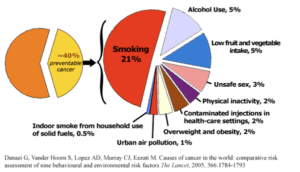
The impact of a balanced diet and nutritional supplements in preventing chronic diseases has been wellresearched – people need to be educated in this regard. Cancer can be prevented by addressing modifiable risk factors.
Estimated proportion of preventable cancer associated with 9 leading modifiable risk factors.

References
Danaei G, et al. 2005. Causes of cancer in the world: comparative risk assessment of nine behavioral and environmental risk factors. The Lancet 366: 1784-1793
World Health Organization, World Health Statistics 2008, Geneva: 2008.
To see our "Recipe for a healthier, longer life" article which appeared in the Business day please click here.
Cellfood: a free radical scavenger
Background
Cellfood® (Deutrosulfazyme, NuScience Corporation, USA) is a non-addictive, non-invasive, and completely non-toxic proprietary colloidal-ionic formula containing the finest all-natural, plant-based organic substances including ionic minerals, enzymes, amino acids and deuterium sulphate as traces (Iorio, 2003). Cellfood® was shown to be useful in the modulation of oxygen bioavailability in athletes (Van Heerden et al., 2001; Iorio, 2005) and in the lowering of d-ROMs test values (Alberti et al., 2000) in subjects at risk of oxidative stress (Coyle, 2004). In an analytical test for dissolved oxygen (conducted at an independent FDA certified laboratory), Cellfood® increased the amount of dissolved oxygen in water over a 60 minute period by 58%. According to Cromarty (2006) the product has no toxic effects and could possibly stimulate the immune system as verified in an in vitro lymphocyte study.
Introduction
A free radical (also known as an oxidant) can be defined as an individual or group of atoms that posses at least one unpaired electron thus making it highly reactive and unstable. Free radicals may interact with key cell components causing irreversible damage resulting in the increased development of diseases such as cancer, cardiovascular disease and other age related diseases. It is believed that anti-oxidants aid in the fight off of free radicals (Wiendow, 2009).
Why are free radicals so harmful?
It is a scientific fact that the accumulation of free radicals over an extended period of time can lead to oxidative stress. According to Heilbronn and co-workers (2006), oxidative stress refers to oxidative damage caused by reactive oxygen species (ROS). ROS is produced by various cell types and includes immune and endothelial cells, and inner cellular organelles like the mitochondria (Carter et al., 2007). These free radicals play a maladaptive role in the body by attacking lipids, protein and DNA and in the process generate a variety of products such as harmful oxidized lipids, less functional proteins, carbohydrates and nucleic acids that negatively affect normal cellular function (Heilbronn et al., 2006). It is scientifically documented that free radicals also increase in the body during stress and exercise (van der Merwe, 2004).
In the human body low levels of antioxidants, or inhibition of the antioxidant enzymes, can also cause oxidative stress. Consequently, humans have a complex network of antioxidant metabolites and enzymes that work together to prevent oxidative damage. In general, antioxidant systems either prevent these reactive species from being formed, or remove them before they can damage vital components of the cell. However, since ROS do have useful functions in cells, such as redox signaling, the function of antioxidant systems is not to remove oxidants entirely, but instead to keep them at an optimum level (Mathews and van Holde, 1990).
As oxidative stress might be an important part of many human diseases, the use of antioxidants in pharmacology is intensively studied, particularly as treatments for stroke and neurodegenerative diseases.
Cellfood® reduces oxidative stress
Several compounds in the blood (plasma) can oppose the oxidant potential of ROS. Virtually any compound either endogenous (GSH, thiols, proteins, uric acid, bilirubin, etc), or exogenous (b carotene, vitamins C and E, etc.), if able to donate an electron, have the ability to scavenge free radicals (Mathews and van Holde, 1990).
The effectiveness of the antioxidant plasma barrier can be evaluated by testing its ability to reduce a determined substrate (donate one or more electrons to the oxidant substance). A simple, automated test measuring the ferric reducing ability of plasma (the FRAP assay), is a novel method for assessing "antioxidant power." Ferric to ferrous ion reduction at low pH causes a colored ferrous-tripyridyltriazine complex to form. FRAP values are obtained by comparing the absorbance change at 593 nm in test reaction mixtures with those containing ferrous ions in known concentration. Absorbance changes are linear over a wide concentration range with antioxidant mixtures, including plasma, and with solutions containing one antioxidant in purified form. There is no apparent interaction between antioxidants. The FRAP assay offers a putative index of antioxidant, or reducing potential of biological fluids within the technological reach of every laboratory and researcher interested in oxidative stress and its effects (Benzie and Strain, 1996).
Using a FRAS d-Rom system (a commercial kit version of the FRAP assay), Coyle (2004) measured the reactive oxygen metabolites of 5 000 healthy subjects to establish a base value. The subject's hydroxyperoxide levels had a unimodal distribution that picked between 250 and 300 Carratelli Units (i. e. between 20 and 24 mg/dL H2O2). One Carratelli Unit (CARR U) corresponds to 0.08 mg/100 ml H2O2. The baseline chart is shown below.
As part of the experiment, 60 subjects (32 males and 28 females) were then divided into six categories: smokers (ages 18-30 and 31-50), athletes (ages 18-30 and 31-50), obese (BMI > 30) ages 18-30 and 31-50. Each subject continued their normal lifestyle during the six week study consuming 8 drops of Cellfood® 3 times per day. Blood measurements were taken once weekly and averaged.
Before supplementation commenced, the smoker group (ages 31-50) and the athlete group (ages 18-30) experienced high levels of oxidative stress (Carr U values were higher than 400). After six weeks of Cellfood® supplementation there was a reduction of 25% and 27.5% respectively in the oxidative stress levels. The other four groups also experienced a reduction between 10 and 17%. It was interesting to note that both the athlete and smoker groups experienced high levels of oxidative stress, thus warranting the additional need to combat free radical activity and cellular damage in these populations.
Cellfood® a powerful antioxidant
It has been established that high d-ROMs values (reactive oxygen metabolites) can be reduced in both healthy and health-challenged individuals by the administration of liquid formulas containing low concentrations of antioxidants. Iorio and co-workers (2006) tested the hypothesis that Cellfood® would be able to reduce the oxidative stress in vivo due to its intrinsic antioxidant properties in vitro (Coyle, 2004).
The antioxidant activity of Cellfood® was measured by means of the BAP (Biological Antioxidant Potential) test performed with FRAS4 (Free Radical Analytical System 4). The biological antioxidant potential of Cellfood® measured 64 747 ± 3 660.5 mM (CV 5.7%) which is almost 30 times higher than the normal value of human plasma (2 200 mM). The authors concluded that the powerful antioxidant potential of Cellfood® may be ascribable to some of the specific active principles of Cellfood®, including natural extracts and antioxidant enzymes. This property can reasonably explain the ability of Cellfood® to reduce in vivo the d-ROMS test values (Coyle, 2004; Iorio et al., 2006).
References
Alberti, A., Bolognini, L., Macciantelli, D., and Carratelli, M. 2000. The radical cation N,N-diethyl-para-phenylendiamine: a possible indicator of oxidative stress in biological samples. Res Chem Intermed 26 (3): 253-267
Benzie, I.F.F and Strain, J.J. 1996. The ferric reducing ability of plasma (FRAP) as a measure of “Antioxidant Power”: the FRAP assay. Analytical Biochemistry 239: 70-76
Carter, C.S., Hofer, T., Seo, A.Y. and Leeiwenburgh, C. 2007. Molecular mechanisms of life and health-span extension: Role of calorie restriction and exercise intervention. Nutr. Metab. 32: 954-966
Coyle, M. 2004. Free radical clinical study by laboratory tests. NuScience Corporation. Health products update
Cromarty, A.D. 2006. Toxicity test results: Lymphocyte survival/proliferation assay using varying concentrations of three tested compounds: Cellfood, NCODE and Switch. Research report - Department of Pharmacology and Biomedical Research, University of Pretoria (RSA)
Heilbronn, L.K., de Jonge, L. and Frisard, M.I. 2006. Effects of 6-month calorie restriction on biomarkers of longevity, metabolic adaptation, and oxidative stress in overweight individuals. American Medical Association 295 (13):1539-1547
Iorio, E.L. 2003. Deutrosulfazyme (Cellfood®). Overview clinico-farmacologica. Proceedings International Conference Safety Evaluation of Complementary and Alternative Medicine October 24-25
Iorio, E.L. 2005. Oxidative stress, sport trauma and rehabilitation. New proposals for an integrated approach. Proceedings XIV International Congress on Sports Rehabilitation and Traumatology. “The accelerated rehabilitation of the injured athlete” April 9-10: pp 127
Iorio, E.L., Bianchi, L., and Storti, A. 2006. Cellfood® (Deutrosulfazyme): a powerful antioxidant. Preliminary scientific study (International Observatory of Oxidative Stress, Free Radicals and Antioxidant Systems - Parma, Italy)
Mathews, C.K. and van Holde, K.E. 1990. Biochemistry. The Benjamin/Cummings Publishing Company Inc
Van der Merwe, A. 2004. Stress solutions. Understand and manage your stress for a balanced, energised life. Tafelberg Publishers, Cape Town
Van Heerden, J, De Ath, K, and Nolte, H. 2001. Product Efficacy Report. The study on the effects of Cellfood® on elite athletes. Institute for Sport Research, University of Pretoria (South Africa)
Wiendow, R.A. 2009. Biological and physiological ageing. Research Starters 1-5
Homocysteine and diabetes mellitus
What is the link between high levels of homocysteine and diabetes mellitus with reference to the risk for coronary heart disease?
Introduction
Over 200 million people world-wide suffer from diabetes mellitus (DM). The incidence is increasing and some scientists predict that in the next 20-25 years, as life expectancy increases, this number will exceed 300 million. DM is characterised by hyperglycaemia. Two major types of DM are described: type I or more commonly known as insulin dependent diabetes mellitus (IDDM), and type II known as non-insulin dependent diabetes mellitus (NIDDM). Type I affects approximately 15% of all people with diabetes whereas type II affects approximately 85%. In normal individuals, blood glucose levels in the body are tightly regulated between 3.5 and 5.5 mmol/l by a myriad of hormones acting on a number of tissues including the kidney, liver, muscle and adipose tissues (Mathai et al., 2007).
Diabetes and vascular disease
“Diabetic complications are predominantly due to microvascular and macrovascular damage. Microvascular complications include renal failure, blindness and symptomatic sensorimotor neuropathy; macrovascular complications include coronary artery and peripheral vascular disease. In the last 10 years, large scale clinical studies have shown the link between good long term glycaemic control and a reduction in these complications in type I and II diabetes.
The molecular and cellular mechanisms underlying the vascular pathology in DM are probably multifactorial. The primary target is the endothelial cell which lines both large and small blood vessels and maintains vascular integrity by acting as a selective barrier to transvascular flux. The endothelial cell has a myriad of functions including regulation of cell adhesion, fibrinolysis, thrombosis, extracellular matrix production and in maintaining vascular tone. These functions are stimulated by flow and mechanical stress and mediated through the production of antioxidants, antithrombotics and anti-adhesives. These mechanisms afford protection to the integrity of the microvessel. Vasoactive regulators produced by the endothelium include arachidonic acid products and nitric oxide. Nitric oxide is the major regulator of flow dependent dilatation after increased arteriolar flow. The failure of tissues to regulate blood flow is one of the major functional problems thought to contribute to vascular damage in diabetes.” - Mathai et al., 2007.
Homocysteine and vascular disease (Mathai et al., 2007)
“McCully first postulated a link between elevated homocysteine concentrations and vascular disease in homocystinuric patients. Patients with this condition have fasting homocysteine levels over 100 mmol/l compared with general population concentrations of less than 10 mmol/l. In homocystinuria, 50% of patients suffer thromboembolic or atherosclerotic events before 30 years. Homocystinuria is essentially a metabolic disorder characterised by defects in the remethylation or catabolism of homocysteine resulting in elevated homocysteine concentrations. Irrespective of the underlying metabolic defect the risk of vasculopathy is the same. This suggests that homocysteine, and not the metabolic block, is responsible for disease.
In the last 25 years a large number of prospective studies have confirmed that homocysteine is an independent risk factor for vascular disease in the general population. One in seventy people show elevated levels, the majority of which are due to genetic or nutritional factors. Evidence for causality comes from a number of studies of which a synthesis is listed below:
- in homocysteine occur before the onset of vascular disease.
- Elevated homocysteine levels show the same strong graded risk effect for both micro and macrovascular complications, performed across different continents, using different research methodologies. These studies include genetic and other causes of raised homocysteine levels.
- Homocysteine lowering treatment decreases blood pressure, reverses endothelial dysfunction and decreases the rate of coronary re-stenosis.
- In vitro and in vivo work confirm that homocysteine is both atherogenic and thrombogenic, providing biological plausibility for causality.
What are the mechanisms through which homocysteine may promote damage?
An association between elevated levels of homocysteine and the vascular complications of diabetes has been reported by several research groups (Hoogeveen et al., 1998). In patients with diabetes, elevated homocysteine levels have been reported to be associated with endothelial dysfunction (Hofmann et al., 1998), insulin resistance (Meigs et al., 2001), prothrombotic state (Aso et al., 2004), macroangiopathy Smulders et al., 1999; Buysshaert et al., 2000) and nephropathy (Buysschaert et al., 2000; Davies et al., 2001; Emoto et al., 2001).
A host of mechanisms through which homocysteine may promote vascular damage (Welch and Loscalzo, 1998), as well as a synergism between homocysteine and diabetic status have been reported (Hofmann et al., 1998). Of note, several studies have demonstrated that elevated homocysteine levels predict the risk of death or coronary events in patients with type 2 diabetes mellitus (Kark et al., 1999; Stehouwer et al., 1999; Hoogeveen et al., 2000). In patients with type 2 diabetes, however, plasma homocysteine levels have been reported to be increased, unchanged or decreased. Conflicting results regarding the circulating levels of homocysteine in patients with diabetes may relate to heterogeneity of the patients included, particularly with regard to renal function status and presence of vascular arterial disease. Another important reason for conflicting results may relate to the remarkably small numbers of patients included in the studies assessing circulating homocysteine levels in patients with diabetes (Ndrepepa et al., 2008).
Only a few studies have dealt with the link between hyperhomocysteinemia and macroangiopathy in diabetic patients. However, all these studies report a strong association between total homocysteine (tHcy) and macrovascular lesions (see review by Buysshaert et al. (2007). Buysshaert and co-workers (2000) studied 122 type 2 diabetic subjects and presented evidence that the prevalence of macroangiopathy was higher in individuals with hyperhomocysteinemia than in those without hyperhomocysteinemia (70% versus 42%, p < 0.01), even when other confounding risk factors were taken into account (in particular renal function).
In a study by Rudy and co-workers (2005) diabetic patients with coronary artery disease had higher tHcy in comparison with diabetic individuals without vascular lesions; homocysteine levels correlated significantly with incidence of ischemic heart disease. These results are in keeping with data from Becker et al. (2003), who showed that among type 2 diabetic individuals, the risk of coronary events increased by 28% for each 5 mmol/l increment of tHcy, independent of traditional cardiovascular risk factors. The study of Hoogeveen et al. (2000) indicated that hyperhomocysteinemia appeared to be a higher (1.9-fold) risk factor for mortality in type 2 diabetic patients than in non-diabetic subjects. Soinio et al. (2004) extended these results by showing that type 2 diabetic patients with tHcy above 15 mmol/l had a heightened risk of coronary heart disease mortality during a 7-year follow-up than those with levels below 15 mmol/l, even after adjustment for confounding variables.
In type 1 diabetic patients, Hofmann and co-workers (1998) observed a macroangiopathy prevalence of 57 and 33%, respectively, in the presence and absence of hyperhomocysteinemia. This increased prevalence was confirmed by Agullo´-Ortuno and co-workers (2002).
Can homocysteine levels be lowered by nutritional supplements?
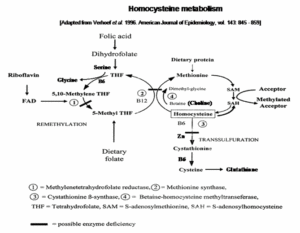
Homocysteine is either re-methylated to methionine by a vitamin B12 and folate-dependent enzyme (5-methyltetrahydrofolate-homocysteine methyltransferase), or is irreversibly catabolised by the transsulphuration pathway, which utilises vitamin B6 (pyridoxal-5'-phosphate) in at least one enzyme-catalysed reaction (Figure 1). Defects in either of these pathways will result in hyperhomocysteinemia. Such a defect can either be caused by a) a deficiency of one of the essential co-factors for normal homocysteine metabolism; vitamin B12, vitamin B6 or folate, or b) certain enzyme variants, which may also cause hyperhomocysteinemia.
For efficient homocysteine metabolism, an adequate supply of vitamin B12, vitamin B6, folic acid, zinc and trimethylglycine (betaine) is required. However, during food refinement and processing, losses of these nutrients may occur (Van Brummelen 2005 and 2007).
Vitamin and mineral supplementation and homocysteine
A daily vitamin supplement (containing vitamin B6, folic acid and vitamin B12) normalised elevated circulating homocysteine levels in patients within six weeks of treatment (Ubbink et al., 1993). This was in agreement with Brattstrom's studies (Brattstrom et al., 1988), which investigated the effect of vitamin B12, vitamin B6 and folic acid on circulating homocysteine levels. Magnesium is also an essential co-factor for the enzyme methionine adenosyl transferase, which forms SAM from L-methionine. It is thus clear that the vitamin and mineral status is an important determinant of circulating homocysteine levels (Van Brummelen, 2005).
In a clinical trial conducted at the ISR (University of Pretoria), Kruger and co-workers (2009) studied the efficacy of NCODE (Cellfood Longevity) on physical performance and selected markers of health status in males. Twenty healthy sedentary volunteers between the ages of 30 and 60 years with a homocysteine level higher than 10 mmol/l were included in the study. Some of the findings were as follow:
- Statistically significant increase in serum folate
- Statistically significant reduction in homocysteine (15%)
- No change in urate levels
Conclusion
Reducing homocysteine will not only benefit diabetics, but also non-diabetics suffering from other chronic conditions.
Agullo´-Ortuno M, Albaladejo M, Parra S, Rodriguez-Manotas M, Fenollar M, and Ruiz-Espejo F. 2002. Plasmatic homocysteine concentration and its relationship with complications associated to diabetes mellitus. Clin Chim Acta; 326:105-112.
Aso Y, Yoshida N, Okumura K, Wakabayashi S, Matsutomo R, and Takebayashi K. 2004. Coagulation and inflammation in overt diabetic nephropathy: association with hyperhomocysteinemia. Clin Chim Acta; 348:139-145.
Becker A, Kostense P, Bos G, Heine R, Dekker J, and Nijpels G. 2003. Hyperhomocysteinemia is associated with coronary events in type 2 diabetes. J Intern Med; 253:293-300.
Brattstrom LE, Israelson B, Jeppson JO, and Hultberg BL. 1988. Folic acid an innocuous means to reduce plasma homocysteine. Scandinavian Journal Clinical and Laboratory Investigation;48: 215-221.
Buysschaert M, Dramais AS, Wallemacq P, and Hermans MP. 2000. Hyperhomocysteinemia in type 2 diabetes. Diabetes Care; 23:1816-1822.
Buysshaert M, Preumont V, and Hermans M P. 2007. Hyperhomocysteinemia and diabetic macroangiopathy: guilty or innocent bystander? A literature review of the current dilemma. Diabetes and Metabolic Syndrome: Clinical Research and Reviews; 1: 53-59.
Davies L, Wilmshurst EG, McElduff A, Gunton J, Clifton-Bligh P, and Fulcher GR. 2001. The relationship between homocysteine, creatinine clearance, and albuminuria in patients with type 2 diabetes. Diabetes Care; 24: 1805-1809.
Emoto M, Kanda H, Shoji T, Kawagishi T, Komatsu M, and Mori Kl. 2001. Impact of insulin resistance and nephropathy on homocysteine in type 2 diabetes. Diabetes Care; 24:533-538.
Hofmann MA, Kohl B, Zumbach M, Borcea V, Bierhaus A, and Henkels M. 1998 Homocysteinaemia and endothelial dysfunction in IDDM. Diabetes Care; 21:841-848.
Hoogeveen EK, Kostense PJ, Beks PJ, Mackaay AJ, Jakobs C, and Bouter LM. 1998. Hyperhomocysteinemia is associated with an increased risk of cardiovascular disease, especially in non-insulin-dependent diabetes mellitus: a population-based study. Arterioscler Thromb Vasc Biol; 18:133-138.
Hoogeveen EK, Kostense PJ, Jakobs C, Dekker J, Nijpels G, and Heine RJ. 2000. Hyperhomocysteinemia increases risk of death, especially in type 2 diabetes: 5-year follow-up of the Hoorn Study. Circulation; 101:1506-1511.
Kark JD, Selhub J, Bostom A, Adler B, and Rosenberg IH. 1999. Plasma homocysteine and all-cause mortality in diabetes. Lancet; 353:1936-1937.
Kruger PE, Wood PS, Grant R, and Clark J. 2009. Efficacy of NCODE (Cellfood Longevity) on physical performance and selected markers of health status in males. Research report, Institute for Sports Research, University of Pretoria.
Mathai M, Radford SE, and Holland P. 2007. Progressive glycosylation of albumin and its effect on the binding of homocysteine may be a key step in the pathogenesis of vascular damage in diabetes mellitus. Medical Hypotheses; 69: 166–172.
Meigs JB, Jacques PF, Selhub J, Singer DE, Nathan DM, and Rifai N. 2001. Framingham Offspring Study. Fasting plasma homocysteine levels in the insulin resistance syndrome: the Framingham offspring study. Diabetes Care; 24: 1403-1410.
Ndrepepa G, Kastrati A, Braun S, Koch W, Kolling K, Mehilli J, and Schomig A. 2008. Circulating homocysteine levels in patients with type 2 diabetes mellitus. Nutrition, Metabolism and Cardiovascular Diseases; 18: 66-73.
Rudy A, Kowalska I, Straczkowski M, and Kinalska I. 2005. Homocysteine concentrations and vascular complications in patients with type 2 diabetes. Diabetes Metab; 31:112-117.
Santora R, and Kozar RA. 2009. Research review. Molecular mechanisms of pharmaconutrients. Journal of Surgical Research; 1-7.
Smulders YM, Rakic M, Slaats EH, Treskes M, Sijbrands EJ, and Odekerken DA. 1999. Fasting and post-methionine homocysteine levels in NIDDM. Determinants and correlations with retinopathy, albuminuria, and cardiovascular disease. Diabetes Care; 22:125-132.
Soinio M, Marniemi J, Laakso M, Lehto S, and Ronnemaa T. 2004. Elevated plasma homocysteine level is an independent predictor of coronary heart disease events in patients with type 2 diabetes mellitus. Ann Intern Med; 140:94-100.
Stehouwer CD, Gall MA, Hougaard P, Jakobs C, and Parving HH. 1999. Plasma homocysteine concentration predicts mortality in non-insulin-dependent diabetic patients with and without albuminuria. Kidney Int; 55:308-314.
Ubbink JB, Vermaak WJH, Bennett JM, Becker PJ, Van Staden DA and Bissbort S. 1991. The prevalence of homocysteinemia and hypercholesterolemia in angiographically defined coronary heart disease. Klinische Wochenschribe;69: 527-534.
Ubbink JB, Vermaak WJH, Van der Merwe A, and Becker PJ. 1993. The nutritional status of vitamin B-12, vitamin B-6 and folate in men with hyperhomocysteinemia. The American Journal of Clinical Nutrition;57: 47-53.
Ueland PM, and Refsum H. 1989. Plasma homocysteine, a risk factor for vascular disease: plasma levels in health, disease, and drug therapy. The Journal of Laboratory and Clinical Medicine;114: 473- 501.
Van Brummelen R. 2005. L-methionine as immune-supportive supplement in HIV and other immune-deficient conditions: a clinical study. Doctoral thesis, Tshwane University of Technology, Pretoria, South Africa.
Van Brummelen R, and du Toit D. 2007. L-methionine as immune supportive supplement: a clinical evaluation. Amino Acids; 33: 157-163.
Verhoef et al. 1996. American Journal of Epidemiology; 143: 845 – 859.
Welch GN, and Loscalzo J. 1998. Homocysteine and atherothrombosis. N Engl J Med; 338:1042-1050.